Composite veneers are tooth-colored resin shaped onto the teeth, usually in one visit and at a lower cost per tooth. Porcelain veneers are thin ceramic shells made in a dental laboratory and bonded on over two or more visits. Porcelain resists stain and lasts longer: in a ten-year randomized trial, every ceramic veneer survived, compared with 75% of lab-made composite veneers.
I've practiced cosmetic dentistry in Overland Park since 2004, and I still tell some patients that composite is the right call for them.
The choice comes down to what you want changed, how your teeth meet, and how long you want the result to last.
Composite vs porcelain veneers at a glance
| Compare | Composite veneers | Porcelain veneers |
|---|---|---|
| What they are | Tooth-colored resin sculpted on the tooth (direct), or made in a lab and bonded (indirect) | Thin ceramic shells made in a dental laboratory and bonded to the tooth |
| Visits | Usually one for direct composite | Two or more, plus design time |
| Tooth preparation | Often little or none | A thin layer of enamel in most cases |
| Ten-year survival in a randomized trial | 75% (lab-made composite) | 100% |
| Staining | Absorbs stain and loses its polish over time | Glazed ceramic holds its color |
| Look | Good on day one, can read flatter as it ages | Can copy the translucency and color shifts of enamel when layered by hand |
| Repairs | Small chips can often be patched in the chair | A cracked veneer is usually replaced |
| Can it be undone? | Yes, when no enamel was removed | No, once enamel has been prepared |
| Upfront cost | Lower per tooth | Higher per tooth |
| Best fit | One chipped tooth, a small gap, a tight budget | Changing shape, length and color across several teeth for the long term |
What is the difference between composite and porcelain veneers?
Composite veneers are tooth-colored resin, and porcelain veneers are ceramic. That one difference drives almost everything else, from how many visits you need to how your teeth look ten years from now.
Composite comes in two forms.
- Direct composite is built onto the tooth in layers, hardened with a curing light, then shaped and polished, usually in a single visit.
- Indirect composite is made in a laboratory from a model of your teeth and bonded on at a second visit.
Porcelain veneers are always made outside the mouth. A ceramist builds each one from a scan or model, fires it in a furnace, and your dentist bonds it to the front of the tooth.
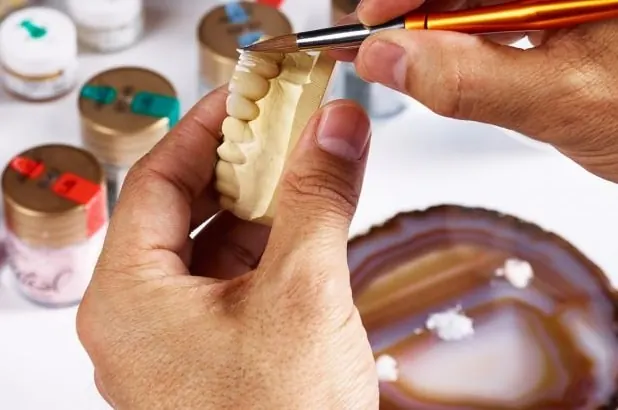
Where that porcelain is made matters more than patients expect. Every veneer I place comes from a small ceramics studio in West Hollywood, where the same technician has built my cases for over a decade.
He layers the ceramic by hand, and that layering is how a veneer picks up the color changes and translucency real enamel has.
How long do composite veneers last compared with porcelain?
Porcelain veneers last longer than composite veneers in the published long-term research, and the gap is wide enough to change the math on cost.
The cleanest comparison comes from a randomized trial of composite and ceramic veneers in the Journal of Dentistry. Researchers placed lab-made composite veneers and ceramic veneers side by side in the same mouths and followed them for ten years.
After a decade, every ceramic veneer was still in place, compared with 75% of the composite ones. The composite veneers that survived also matched the neighboring teeth less well and showed more roughness, wear, and fractures.
For porcelain on its own, the International Journal of Prosthodontics estimated 95.7% still in place at five years. Ten-year results ranged from 64% to 95% across studies, and the authors put the best estimate near 95% for veneers bonded to enamel.
Direct composite has less long-term research behind it. Its weak spot is the edges, which chip and need touch-ups over time.
I explain veneers to patients the way I'd explain a Porsche 911. You bought a really nice luxury good; you still change the oil, and at some point the engine needs work.
Both materials need that upkeep, but composite needs it sooner and more often.
Do composite veneers stain more than porcelain?
Yes. Composite resin absorbs stain over time, and porcelain does not.
Coffee, tea, red wine, and smoking darken resin gradually, and as the surface loses its polish, stain clings to it faster. A hygienist can polish some of that off composite at your cleanings.
Porcelain has a glazed ceramic surface that holds its color for years. The spot to watch is the margin, the thin line where the veneer meets your tooth, which can pick up stain if the edge is rough or the bond starts to break down.
We check that line at every hygiene visit and compare it against a stored scan from the last one.
One more thing about color. Whitening gel lightens natural enamel and doesn't change the color of composite or porcelain, so whiten your natural teeth first and match the veneers to the new shade.
Which looks more natural, composite or porcelain veneers?
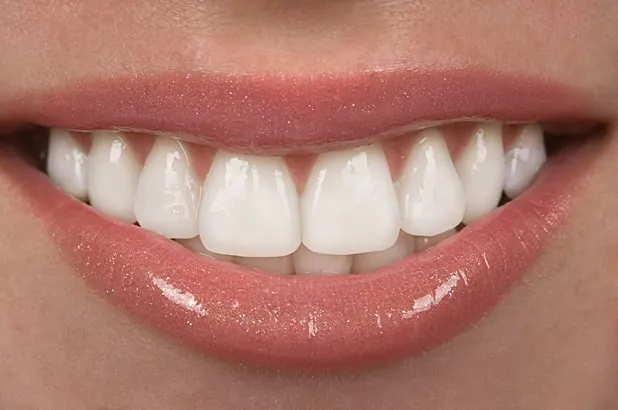
Hand-layered porcelain looks the most natural because it can copy the depth and translucency of enamel. Light passes into a well-made ceramic veneer and scatters the way it does in a real tooth.
Composite in skilled hands can look excellent on the day it's placed. Over the years, it tends to lose its shine and read a little flatter than the teeth around it, which matches what the ten-year trial found on color match and surface roughness.
The material is only half of it. A large share of the people I see for veneers are sixty or older, and many of them put the idea off for years after seeing a friend's set that looked fake. They tell me they don't want chiclets; they want teeth that look like teeth.
A veneer looks fake when it comes in one flat shade, when it's too white for the face, or when it was designed from a photo instead of from how the jaw works. Each of those is a planning or lab problem, and each one is avoidable.
Porcelain Veneers
Porcelain veneers in Overland Park, KS by Dr. Patrick Lillis. Minimal-prep veneers planned around your bite and face, made by hand at a small West Hollywood ceramics studio. Serving Leawood, Prairie Village, and Kansas City.
Learn moreHow much of your tooth do composite and porcelain veneers remove?
Direct composite often needs little or no drilling, while porcelain veneers usually need a thin layer of enamel removed. That's the main reason people call composite reversible.
Reversible only holds when nothing was taken off. If the enamel stays intact under composite, the resin can be polished away later, and you're back to your own teeth.
Once enamel is shaped for any veneer, that tooth needs a covering for the rest of its life.
With porcelain, I keep the preparation in enamel wherever I can. Ceramic bonds most predictably to enamel, and the porcelain survival review found the best long-term results in veneers bonded to it. Under a well-bonded veneer, the tooth is sealed and protected.
If your teeth are healthy and color is the only thing that bothers you, I'd rather whiten them than veneer them. Veneers are for shape, length, gaps, and wear.
What's the downside to composite veneers?
The main downsides of composite veneers are staining, a shorter lifespan, and more frequent upkeep. These are the ones I go over at a consultation:
- Stain. Resin darkens with coffee, tea, wine, and smoking, and needs polishing to stay bright.
- Lost shine. The surface dulls over the years and can look flatter than the teeth beside it.
- Chipping. Edges chip more easily than porcelain, especially in people who grind, though small chips can usually be repaired in the chair.
- Shorter life. Expect to repair or redo composite sooner than porcelain.
- Dependence on the dentist's hand. Direct composite is sculpted freehand, so the result depends on the dentist's artistry tooth by tooth.
Porcelain has downsides too. It costs more per tooth, takes two or more visits, and usually needs some enamel removed, and a cracked porcelain veneer is generally replaced rather than patched.
Does grinding your teeth change which veneer you should get?
Yes. Grinding and clenching raise the failure risk for both composite and porcelain, so the bite check matters as much as the material.
A study of 323 porcelain veneers tracked which ones failed. Of 13 fractures and 29 veneers that came loose, 8 of the fractures and 22 of the loose veneers were in patients who grind. Wearing a night guard lowered the fracture risk.
Composite handles grinding poorly too. It wears faster than ceramic, and its edges chip under heavy force.
I tell every cosmetic patient that function comes first and the cosmetic result is a byproduct of it. A veneer placed over a bite that loads it wrong will chip, whatever it's made of.
That's why the new patient exam here looks at how your teeth meet, your jaw joints and the muscles that move them, whether you came in for one chipped tooth or a full set of veneers.
When the front teeth have worn short from years of grinding, the problem is usually the whole bite, and covering six teeth with veneers won't solve it. Those cases call for full mouth rehabilitation, sometimes with TMJ treatment for the jaw joints as part of the plan.
A growing share of my veneer work is redoing veneers placed at another office. When I take one of those cases apart, the material is usually fine, and the original plan misread the bite.
If that sounds like your veneers, a dental second opinion starts with new records and a fresh diagnosis.
Are composite veneers cheaper in the long run?
Composite veneers cost less per tooth up front, but the gap narrows over time because composite needs repairs and replacement sooner.
Let's do the math together without price tags, since fees depend on how many teeth are involved and what the bite needs.
Start with the per-tooth fee for each material. Then ask how many times you'd pay for repolishing, repairs, or a full redo over the next fifteen or twenty years.
If composite needs redoing twice in the time one porcelain set lasts, the two totals can land closer than the first quote suggests.
In my office, cost comes after the diagnosis. You get a written plan with costs, usually with two or three options at different price points, so you can take them home and compare.
Can you try out veneers first?
Yes. You can wear a trial version of your new smile first. Some offices use composite as a test drive for a new shape and move to porcelain later.
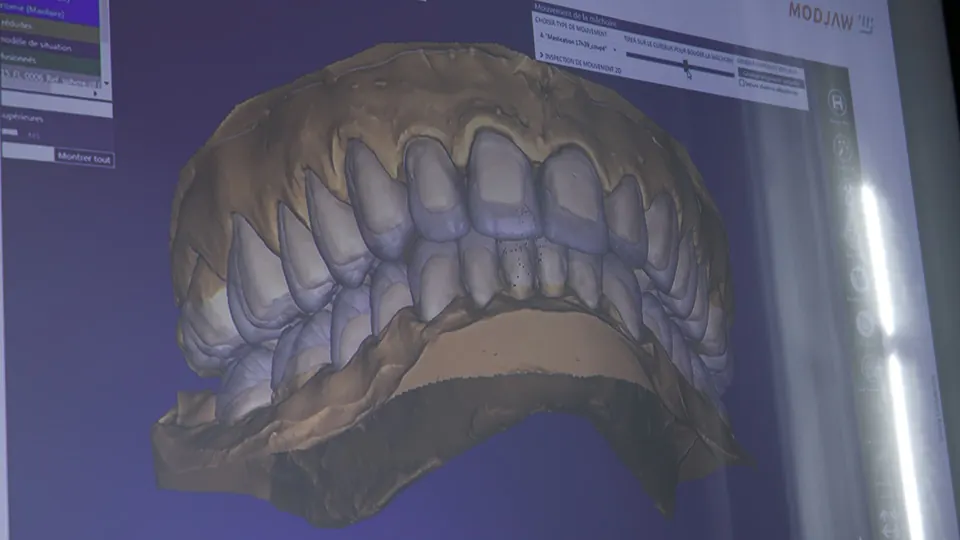
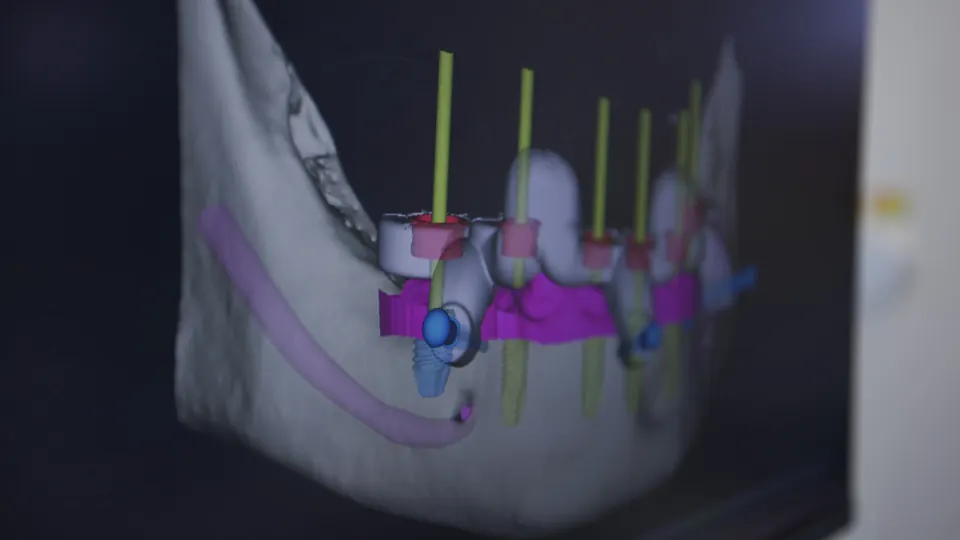
In my office, the test drive is part of the porcelain process. Your records go to a designer in California, the design comes back in about half an hour, and we print it in our in-office lab.
You wear that design as temporaries and live with it for a while. Once you sign off, the ceramist builds the final porcelain veneers as a copy of what you approved.
Which veneer should you choose?
Choose composite for small, low-commitment fixes, and choose porcelain for changes across several teeth that you want to last.
Composite is usually the better fit when:
- One tooth is chipped or slightly misshapen
- You want to close a small gap
- You want to keep your enamel untouched and keep the option to undo it
- Budget is the deciding factor right now
Porcelain is usually the better fit when:
- You want to change the shape, length, or color of several front teeth as part of a smile makeover
- You want the result to last for many years with less upkeep
- Coffee, tea, or red wine are part of your daily routine
- You're replacing composite that has stained or chipped
A tooth that is cracked or heavily filled needs more coverage than either veneer gives, and a cosmetic crown is usually the better fit there.
A missing tooth is replaced with a dental implant first, and the veneers are planned around it.
Porcelain Veneers
Porcelain veneers in Overland Park, KS by Dr. Patrick Lillis. Minimal-prep veneers planned around your bite and face, made by hand at a small West Hollywood ceramics studio. Serving Leawood, Prairie Village, and Kansas City.
Learn moreComposite and porcelain veneer questions
Can you switch from composite veneers to porcelain later?
Yes. Composite can be removed and the tooth prepared for porcelain, and plenty of patients make that switch once their composite stains or chips. How much enamel remains under the composite affects how the porcelain is planned.
Do porcelain veneers ruin your teeth?
No, when they're planned well. Minimal preparation stays in the outer enamel, and a well-bonded veneer seals the tooth underneath.
Once enamel is removed, the tooth needs a veneer or dental crown for life, and the edges need regular cleanings and checks like any dental work.
How long do composite veneers last?
In a ten-year randomized trial, 75% of lab-made composite veneers were still in place, compared with all of the ceramic veneers. How long yours last depends on your bite, whether you grind, what you eat and drink, and who placed them.
How long do porcelain veneers last?
A systematic review estimated that 95.7% of porcelain veneers survive five years, with ten-year results from 64% to 95% across studies. Veneers bonded to enamel land near the top of that range.
Can you whiten composite or porcelain veneers?
No. Whitening gel lightens natural enamel and doesn't change the color of composite or porcelain. Whiten your natural teeth first, then match new veneers to that shade.
Which is better for front teeth, composite or porcelain veneers?
Porcelain is the stronger choice when several front teeth are being changed for the long term, because it keeps its color and outlasted lab-made composite in a ten-year randomized trial. Composite is a good choice for a single chip or a small gap on one front tooth.
Talk through veneers with Dr. Lillis in Overland Park
If you're weighing composite against porcelain, the consultation gives you a diagnosis of your bite, a design you can see in your mouth, and written options with costs. You decide from there.
Overland Park Dental Design, Patrick B. Lillis, DDS4601 West 109th Street, Suite 318, Overland Park, KS 66211
(913) 451-7330