
Dental Crowns in Overland Park, KS
A dental crown is a custom cap that covers the whole visible part of a tooth, holding a cracked, broken, or weakened tooth together so you can chew on it again. Back teeth most often need crowns after a root canal, a crack, or a large old filling.
At Overland Park Dental Design, Dr. Patrick B. Lillis, DDS, finds out why the tooth broke before he crowns it, so the new crown doesn't fail the same way. The office sits at 109th and Roe in Overland Park, on the Leawood line.
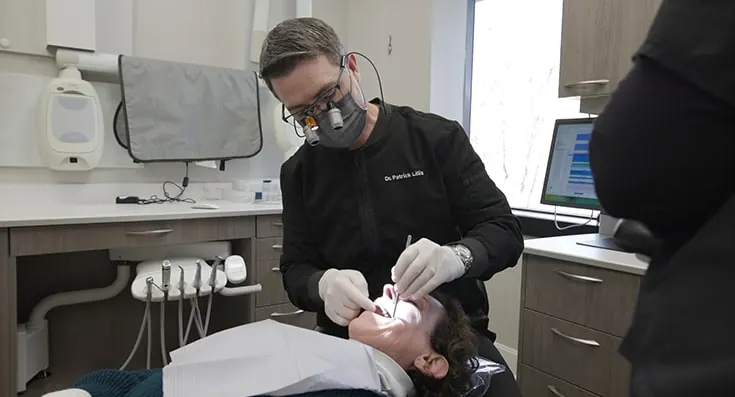
- Crowns for cracked, broken, and heavily filled teeth
- An onlay instead of a crown when enough strong tooth remains
- Crowns built by hand at a small ceramics studio
- Every crown checked against your bite
- Practicing in Overland Park since 2004, one dentist, one location
Filling vs onlay vs crown
The healthier tooth you have left, the smaller the repair it needs, and Dr. Lillis chooses the option that keeps the most of your tooth.
| Compare | Filling | Onlay | Crown |
|---|---|---|---|
| Covers | The decayed or damaged spot | The damaged part plus one or more cusps | The whole visible tooth |
| Best for | Small to medium damage, strong walls | Larger damage, some strong tooth left | Cracks, root canals, little tooth left |
| Tooth removed | Least | Moderate | Most |
| Made | In the chair | In a lab | In a lab |
| Visits | One | Two | Two |
When a tooth needs a dental crown
A tooth needs a crown when it has lost so much structure that a filling can no longer hold it together. A crown covers the whole tooth and braces it from every side.
- A root canal. A study in the Journal of Prosthetic Dentistry found that teeth left without a crown after a root canal were lost at six times the rate of crowned teeth.
- A crack. A crack that runs down the tooth keeps spreading as you chew.
- A large old filling. The walls of the tooth around a big filling get thin and break off.
- A broken tooth. A broken cusp leaves the rest of the tooth weaker.
- Heavy wear. Grinding can wear a tooth down until it needs rebuilding.
On a front tooth, a crown also has to match the color and translucency of the teeth beside it, and a cosmetic crown handles both strength and appearance.
Do you need a crown after a root canal?
Back teeth usually need a crown after a root canal, because the treatment leaves the tooth hollow and more likely to split under chewing force.
Molars and premolars take the heaviest load, and they benefit most from full coverage. A front tooth with most of its structure intact sometimes does well with a filling alone. Dr. Lillis checks how much tooth remains and how your bite hits it before recommending either.
Cracked tooth treatment in Overland Park, KS
A cracked tooth usually hurts when you bite down or release the bite, and it can turn sensitive to hot and cold. The American Association of Endodontists describes five kinds of cracks, and the right treatment depends on where the crack runs.
| Type of crack | What it is | Usual treatment |
|---|---|---|
| Craze lines | Tiny cracks in the outer enamel only | No treatment needed |
| Fractured cusp | A piece of the chewing surface breaks off, often around a filling | A new filling, onlay or crown |
| Cracked tooth | A crack runs from the chewing surface down toward the root | A crown, plus a root canal if the crack reaches the nerve. Extraction if the crack runs below the gum line |
| Split tooth | A crack divides the tooth into separate pieces | The tooth can't stay whole, and treatment may save part of it |
| Vertical root fracture | A crack starts in the root and runs up | Usually extraction |
Cracked molars show up most often, since they do most of the chewing. A crown can often hold together a crack that stops above the gum line, and it usually can't hold one that runs below it, so an early visit matters.
Onlay vs crown
An onlay covers only the damaged part of the tooth, while a crown covers the whole tooth. When enough strong tooth remains, an onlay keeps more of it.
Both hold up well.
An inlay sits inside the cusps of the tooth, and an onlay extends over one or more of them. A tooth that is cracked, has had a root canal, or has very little structure left usually needs full crown coverage.
The dental crown procedure, step by step
A crown takes two main appointments with lab time in between, and the planning starts with finding out why the tooth broke.
Exam and records
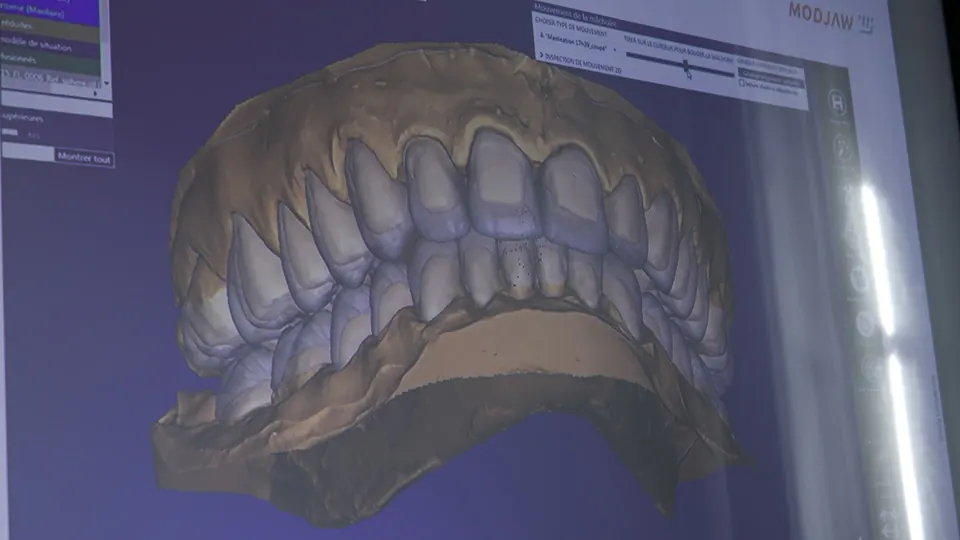
Dr. Lillis examines the tooth, takes X-rays and scans, and records how your teeth meet. A tooth that cracked because of the way your bite hits it can crack again under a new crown unless the plan accounts for it.
Your options and costs
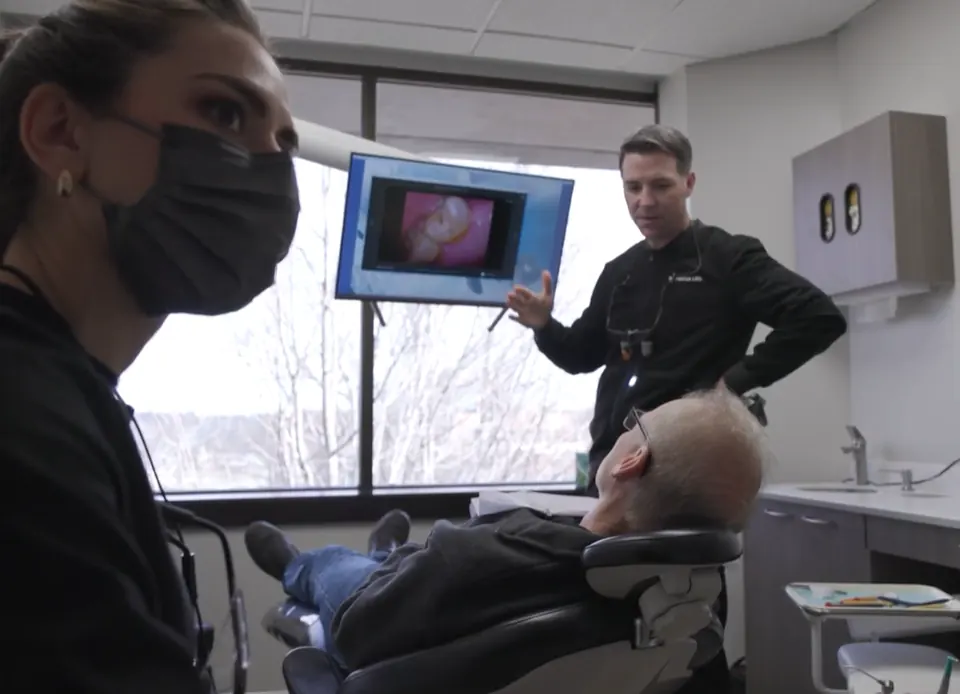
You hear whether the tooth needs a crown or whether a filling or onlay would do the job with less drilling. Each option comes with a written cost.
Preparing the tooth
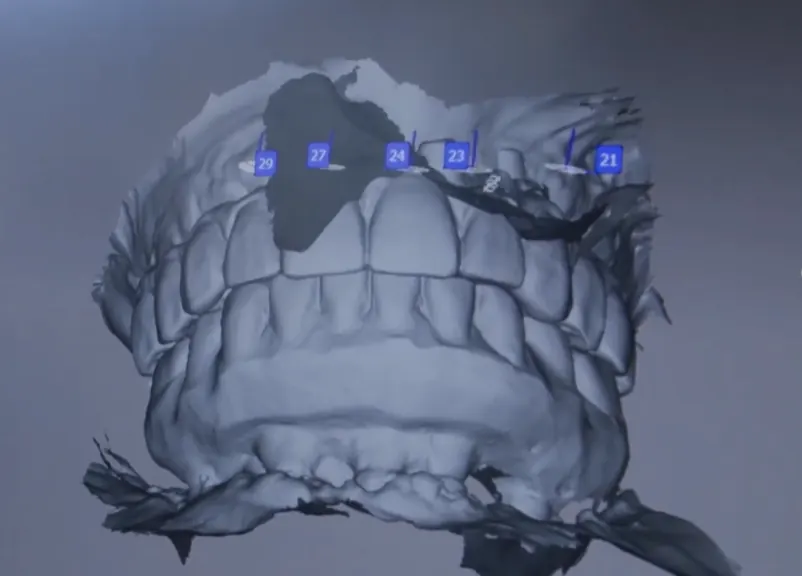
Dr. Lillis numbs the area, removes any old filling and decay, and shapes the tooth evenly on all sides to make room for the crown. If too little tooth remains for the crown to grip, he rebuilds the core first, then scans the tooth.
A temporary crown
You leave with a temporary crown that protects the tooth while the lab makes the final one. The temporary sits on softer cement so it comes off easily at the next visit.
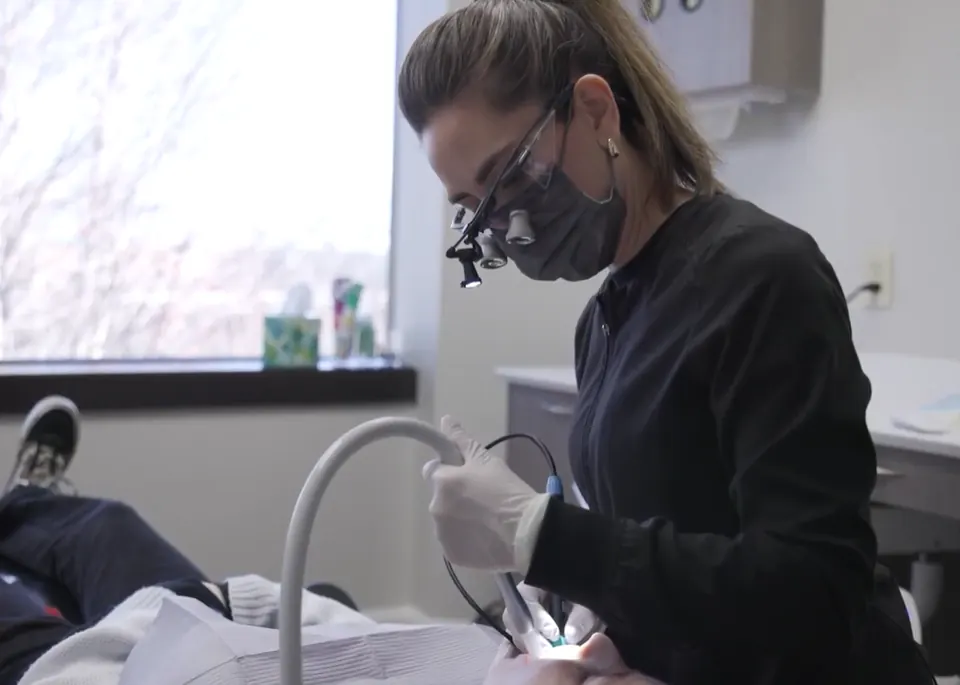
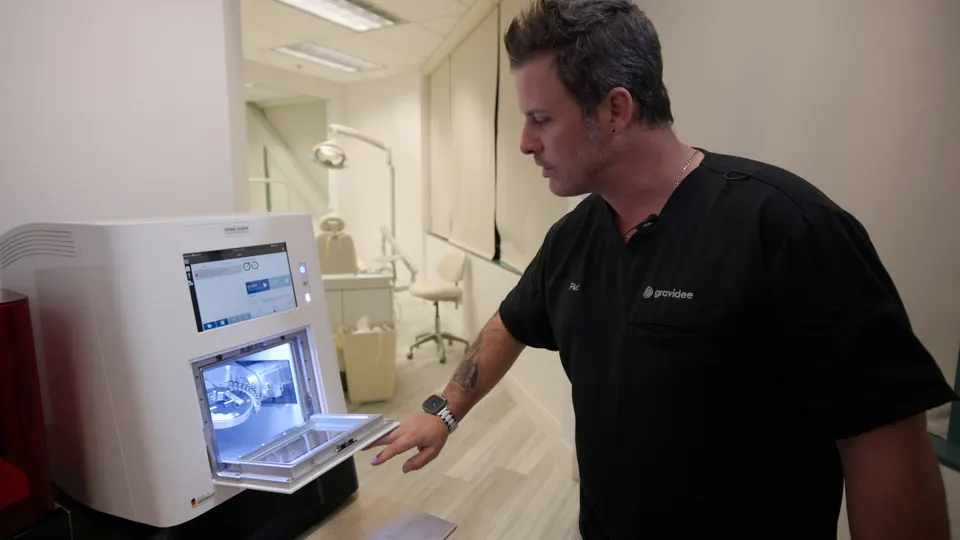
The ceramist builds your crown
The same small studio in West Hollywood that makes the practice's veneers builds your crown by hand, shaped to your bite and shaded to match the teeth beside it.
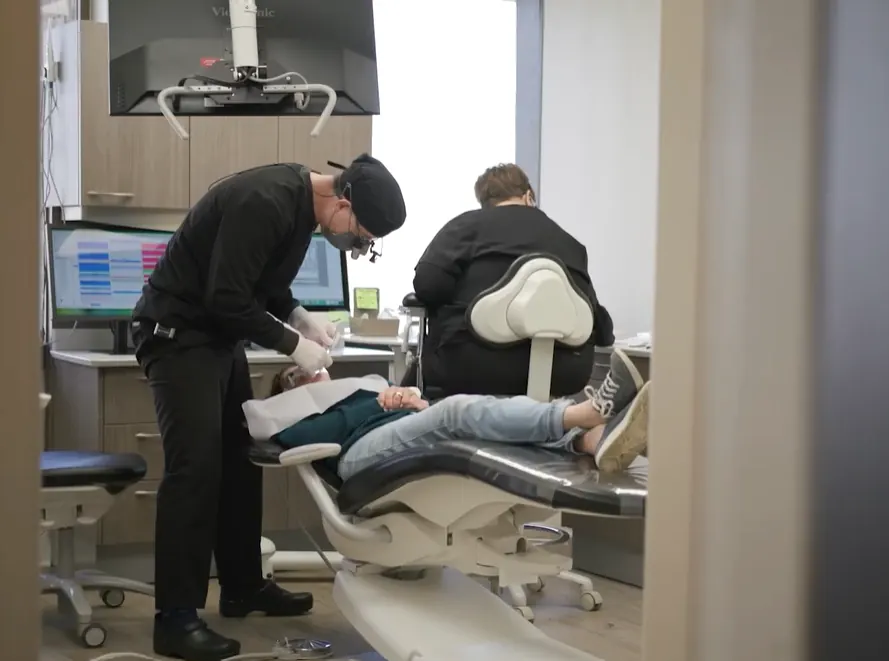
Fitting and bite check
Dr. Lillis tries the crown in and checks the fit at the gumline, the contacts with the teeth on either side, and your bite, then bonds it in place. From then on, your hygienist checks it at every one-hour hygiene visit.
Living with a temporary crown
A temporary crown protects the prepared tooth for the weeks between appointments, and a few habits keep it in place.
- Chew on the other side when you can.
- Skip sticky foods like caramel and gum, and very hard foods like ice and nuts.
- Slide floss out sideways instead of pulling it up through the contact.
- Expect some sensitivity to cold for a few days.
If the temporary comes off, keep it, avoid chewing on that side, and call the office. The tooth underneath can shift or turn sensitive without it.
When crowns keep failing
When crowns keep breaking or coming loose, the cause usually sits in the bite, and a replacement made the same way fails the same way.
“Function is always first. Cosmetics will be a byproduct of proper function.”
Dr. Lillis looks at the teeth, jaw joints, jaw muscles, and airway together. When several teeth fail at once, he plans them as a group, and some cases become full-mouth rehabilitation.
If another office placed the crown, a second opinion starts with new records and a new diagnosis.
The dentist who places your crown
Dr. Patrick B. Lillis completed a two-year Advanced Education in General Dentistry residency at the UMKC School of Dentistry, treating complex restorative, implant, and reconstructive cases under attending faculty.
His passion for dental craft began at age thirteen in his grandfather's dental laboratory, where he learned the art of waxing and casting crowns firsthand. Today, he reads and evaluates crowns with the meticulous eye of an experienced technician.
After founding Overland Park Dental Design in July 2004, Dr. Lillis has continued to share his clinical expertise by lecturing to fellow practitioners through the Seattle Study Club.

What patients say
5.0 on Google · 32 reviews
Their team is detail oriented. You don't leave their office unless everything is perfect. I had major dental work performed. Since then I've received numerous compliments from family, friends & strangers about my new smile.
I was sent to Dr. Lillis by referral to fix a crown that I was told was not fixable. Not only did Dr. Lillis listen to all of my concerns but he was able to fix what others could not in a timely manner and with the utmost regard to detail and perfection. I honestly CANNOT say enough good things about this office. Every single staff member as well as Dr. Lillis himself have exceeded my expectations in all areas of care!!!! I highly recommend Dr. Lillis for all your dental needs.
I've been to a number of dentists over the years. This past year I had to have some major work done. Since it affected my smile, I really wanted a top-level dentist on the job. I also have extreme anxiety about having impressions made like when you need a crown.
First let me say that all the staff at Overland Park Dental Design. are friendly and helpful. Dr. Lillas is truly a top-tier highly skilled dentist with a support team to match. They also have some type of 3d scanning software that means I didn't have to have traditional impressions which was incredible.
My teeth look perfect and the process was super smooth and painless!
I highly recommend Overland Park Dental Design!
What a dental crown costs in Overland Park, KS
The cost of a crown depends on the tooth, the material, and whether you need a core build-up or other treatment first. An onlay usually costs less than a crown.
After your exam, you receive a written plan with the cost of each option. Dental plans often cover part of a crown, and coverage usually depends on whether the tooth is broken or decayed.
Dental crowns near Leawood, Prairie Village and Kansas City
Overland Park Dental Design is in the Foxhill Medical Building at 109th and Roe, just off I-435 at Roe Avenue, on the line between Overland Park and Leawood. Patients come from Leawood, Prairie Village, Mission Hills, Olathe, Lenexa, and across the Kansas City metro.
Overland Park Dental Design, Patrick B. Lillis, DDS4601 West 109th Street, Suite 318, Overland Park, KS 66211
(913) 451-7330
Dental crown questions
Does getting a crown hurt?
Dr. Lillis numbs the tooth first, so most people feel pressure and vibration without pain. Some sensitivity for a few days afterward is common.
How long does a dental crown last?
Most crowns in common materials remain in place at five years in published reviews, and many last much longer. Grinding, decay at the edge and a bite that overloads the crown shorten its life.
Do I need a crown after a root canal?
Back teeth usually do. A root canal leaves the tooth hollow and more likely to break, and teeth without a crown after a root canal were lost at six times the rate of crowned teeth in one study.
Is an onlay better than a crown?
When enough strong tooth remains, an onlay keeps more of it and holds up well. A cracked tooth, a tooth after a root canal, or a tooth with little structure left usually needs a crown.
What should I do if my temporary crown comes off?
Keep it, avoid chewing on that side, and call the office. The tooth underneath turns sensitive and can shift without the temporary in place.
Can you crown a tooth with a crack below the gum line?
Usually not. A crown needs a sound tooth above the gum to grip, and a crack that runs into the root keeps spreading under it. An implant usually replaces that tooth.
What should I do if I think I have a cracked tooth?
Call soon, especially if it hurts when you bite or release. Avoid chewing on that side until a dentist checks it, because a crack caught early is easier to hold together.
How many visits does a crown take?
Two main visits: one to prepare the tooth and place a temporary, and one to fit the final crown, with lab time in between.
Book a crown consultation in Overland Park
If a tooth is cracked, broken, heavily filled, or has had a root canal, the consultation tells you whether it needs a crown, what the least invasive option is, and what it costs.