
TMJ Treatment in Overland Park, KS
TMJ treatment is care for pain, clicking, stiffness or locking in the jaw joints and the muscles that move them, a group of conditions called temporomandibular disorders (TMD). Most cases improve with conservative, reversible care such as rest, heat, jaw exercises, and a custom oral appliance.
At Overland Park Dental Design, Dr. Patrick B. Lillis, DDS, examines your teeth, jaw joints, jaw muscles, and airway together, then explains what is driving the pain and what your options are. The office is at 109th and Roe in Overland Park, on the Leawood line.
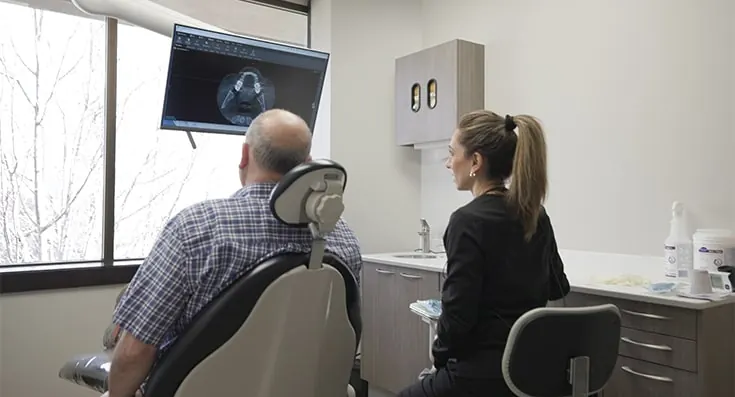
- Jaw pain, clicking with pain, locking, headaches, and worn or cracking teeth
- A full exam of teeth, joints, muscles, and airway
- Conservative, reversible care first
- Bite and restorative work only when your teeth need it
- The Overland Park practice Dr. Lillis built with Bernie Williams, an international lecturer on TMJ and occlusion
TMJ treatment options compared
TMJ treatment runs from simple self-care to surgery, and most people never need anything past the first few rows.
| Treatment | What it involves | Reversible | When it is used |
|---|---|---|---|
| Self-care | Soft foods, heat or ice, no gum chewing, noticing daytime clenching | Yes | First, for almost everyone |
| Jaw exercises and physical therapy | Stretching and strengthening the jaw muscles, sometimes ultrasound | Yes | Muscle pain and stiffness |
| Custom oral appliance (splint) | A hard acrylic appliance worn over the teeth, usually at night | Yes, when it covers all the teeth and does not move the jaw | Night grinding and clenching, muscle pain |
| Medication | Anti-inflammatories, sometimes a muscle relaxant, from your dentist or physician | Yes | Flare-ups |
| Bite correction and restorative work | Rebuilding worn, broken, or missing teeth so they meet evenly | No | When the teeth themselves are damaged |
| Injections and surgery | Joint flushing, steroid injections, arthroscopic or open joint surgery | No | Joint damage that does not respond to conservative care |
TMJ symptoms
The most common TMJ symptoms are pain in the jaw, face, or around the ear, stiffness, and a jaw that clicks, pops, or grates when it hurts.
- Pain in the jaw, the side of the face, or in front of the ear
- Headaches
- Earaches with no ear infection
- Clicking, popping or grating with pain
- A jaw that feels stiff, locks open or locks closed
- Trouble opening wide or chewing
- Teeth that are worn flat, chipped or sore in the morning
Red flags
See a provider soon if your jaw locks and will not open or close, if pain follows an injury, or if pain comes with fever, swelling, numbness, or pain in the chest or arm.
What causes TMJ pain
TMJ disorders usually come from several things at once. Researchers point to a combination of genes, stress and how a person processes pain rather than one single cause.
Common contributors include:
- Clenching or grinding, awake or asleep
- A jaw injury
- Arthritis in the jaw joint
- Tension in the jaw, neck, and shoulder muscles
Does a bad bite cause TMJ?
Current research does not support a bad bite as the cause of TMD, and grinding down healthy teeth to treat jaw pain is not recommended.
The bite still matters for your teeth. Heavy clenching and grinding wear teeth flat, crack them, and break dental work. That damage is a dental problem with a dental fix, and we treat it separately from the pain.
“We don't just look at one tooth. We look at the entire system. And that's their teeth. That's their airway. That's their jaw muscles. That's their joints.”
How TMJ care works at Overland Park Dental Design
TMJ care in Overland Park, KS, starts with a full exam and a clear diagnosis. Treatment begins with the simplest reversible option that fits the cause.
History and exam
You describe where it hurts, when it started, and what makes it better or worse. Dr. Lillis checks how wide your mouth opens, how the jaw moves, and whether the joints click or grate.
He presses on the jaw, temple, and neck muscles to find where the pain comes from. Muscle pain and joint pain are treated differently, so finding the source comes first.
Teeth, bite and airway
Photographs and intraoral scans show wear, cracks, and broken dental work, which point to clenching or grinding. The exam also looks at the airway, since Dr. Lillis examines teeth, joints, muscles, and airway as one system.
If the joint itself needs a closer look, imaging such as X-rays, CT, or MRI can show the bone and the disc inside the joint.
Diagnosis, explained
You hear what is causing the pain: muscles, the joint, clenching, or a mix. The diagnosis decides which conservative steps come first.
Conservative care first
Treatment starts with self-care, jaw exercises, and, where it fits, a custom oral appliance worn at night. You also get clear instructions for daytime habits, since clenching during the day is easy to miss.
Follow-up and next steps
You come back to check what has changed. When the pain comes from outside the mouth, such as the neck, a sleep problem, or a joint that needs surgery, you are referred to the right provider.
When grinding has damaged your teeth, we plan to rebuild them as a separate step once the pain is under control, with full mouth rehabilitation reserved for teeth that are badly worn.
TMJ splints and night guards
A TMJ splint is a custom hard appliance worn over the teeth, usually at night, to reduce the load on the jaw muscles and joints and protect the teeth from grinding.
A night guard is often the same thing under a different name. The word "night guard" usually describes an appliance aimed at protecting teeth from grinding, and "splint" usually describes one used to treat jaw pain.
| Compare | Stabilization splint | Repositioning splint | Store-bought guard |
|---|---|---|---|
| Design | Covers all the upper or lower teeth with a flat surface | Holds the jaw forward or back | Soft plastic molded at home |
| Changes the bite | No, when designed and checked correctly | Can, with a higher risk of permanent bite change past about six weeks | Not fitted or checked by a dentist |
| Typical use | Night grinding, clenching, muscle pain | Short-term, specific joint problems | Short-term stopgap |
The evidence on splints is mixed. Systematic reviews show conflicting results, and we don't fully understand why they help some people. They work best as one part of a plan that also covers habits, muscles and sleep.
What not to do if you have TMJ
Avoid anything that loads the jaw or changes your teeth permanently while the pain is active.
- Chewing gum, nail biting, and chewing on pens
- Very chewy or hard foods, and opening wide for big bites
- Resting your jaw on your hand
- Wearing an appliance that moves your jaw for months without follow-up
- Agreeing to permanent bite changes as the first step for jaw pain
The dentist who treats your jaw
Dr. Patrick B. Lillis completed a two-year Advanced Education in General Dentistry residency at the UMKC School of Dentistry, where he treated complex restorative cases, including patients with worn teeth and bite problems, under attending faculty.
He opened Overland Park Dental Design in July 2004. A few years later, he merged with the practice of Bernie Williams, an international lecturer on TMJ and occlusion, and he later took it over. He lectures to other dentists through Seattle Study Club.

What patients say
5.0 on Google · 32 reviews
I’m always happy with the outstanding care I receive. Everyone is friendly and efficient. Dr Lillis is incredible at what he does….top notch practice!
Dr. Lillis and his team are beyond amazing! From my first consultation to the end result I couldn't have asked for a better experience. They take care of you from the moment you walk in the door. Truly impressed with their concierge approach to dental care. Can't thank them enough!
If you want the best dental care Dr. Lillis and staff are the professionals that you should see.
What TMJ treatment costs in Overland Park, KS
The cost of TMJ treatment depends on the diagnosis. Self-care and exercises cost little, a custom oral appliance is a separate fee, and restorative work for damaged teeth is planned and priced separately.
After your evaluation, you receive a written plan with costs for each step, so you know what the first stage costs and what later stages would involve.
TMJ treatment near Leawood, Prairie Village and Kansas City
Overland Park Dental Design is in the Foxhill Medical Building at 109th and Roe, just off I-435 at Roe Avenue, on the line between Overland Park and Leawood. Patients come from Leawood, Prairie Village, Mission Hills, Olathe, Lenexa and across the Kansas City metro.
Overland Park Dental Design, Patrick B. Lillis, DDS4601 West 109th Street, Suite 318, Overland Park, KS 66211
(913) 451-7330
TMJ questions
Can a dentist treat TMJ?
Yes. Both dentists and physicians treat TMJ disorders. A dentist can examine the teeth, bite and jaw muscles, make a custom oral appliance, and repair teeth damaged by grinding, and refers you on when the cause lies elsewhere.
Does TMJ go away on its own?
Often, yes. About 40% of people see their symptoms resolve without treatment, and most others improve with conservative care. Pain that lasts past a few weeks, or a jaw that locks, is worth an exam.
How do you fix TMJ permanently?
There is no single permanent fix. Most people control TMJ pain long-term by managing clenching, stress, and sleep, doing jaw exercises, and wearing an appliance at night when it helps. Surgery is reserved for joint damage that does not respond to conservative care.
Can TMJ cause ear pain and headaches?
Yes. The jaw joint sits right in front of the ear, so TMJ pain can feel like an earache, and headaches are a common symptom of TMD.
What is the difference between a night guard and a TMJ splint?
Often the same appliance under a different name. "Night guard" usually refers to protecting the teeth from grinding, and "splint" to treating jaw pain. Both should be custom-made and should not change your bite.
How long do you wear a TMJ splint?
Most stabilization splints are worn at night, for as long as they help. Splints that move the jaw forward or back are meant for short periods only, because longer use raises the risk of a permanent bite change.
What is the three-finger test for TMJ?
It is a quick home check of how wide your mouth opens: stack three fingers vertically and see if they fit between your upper and lower front teeth. Trouble fitting them can point to limited opening, which is worth an exam. It is a screening check only, not a diagnosis.
Does clicking in the jaw mean I have TMJ?
Not by itself. Clicking without pain or locking is common and usually needs no treatment. Clicking with pain, or a jaw that catches or locks, should be examined.
What is orofacial pain?
Orofacial pain is pain in the mouth, jaw, and face. TMJ disorders are one common cause, and others include cracked teeth, sinus problems, and nerve pain, which is why the exam looks at more than the joint.
Book a TMJ evaluation in Overland Park
If your jaw hurts, clicks with pain, locks, or you wake up with sore teeth or a headache, the evaluation identifies the cause and the reversible steps to start with. You decide from there.