Single tooth implant
One implant holds one crown. It replaces a missing tooth without touching the teeth on either side, which is why people often choose it over a bridge.

A dental implant is a small titanium or ceramic post that replaces the root of a missing tooth and supports a crown, bridge, or denture. The bone fuses to the post over several months, so the new tooth stays fixed, and you chew with it like a natural tooth.
At Overland Park Dental Design, Dr. Patrick B. Lillis, DDS, plans every implant around the tooth that will sit on it, then designs and builds that tooth to match your bite and your smile. The office is at 109th and Roe in Overland Park, on the Leawood line.
An implant replaces the tooth and its root, a bridge anchors a false tooth to the teeth on either side, and a denture rests on the gums.
| Compare | Dental implant | Bridge | Removable denture |
|---|---|---|---|
| How it stays in | A post fused to the jawbone | Crowns on the neighboring teeth | Suction, clasps or adhesive on the gums |
| Neighboring teeth | Stay untouched | Need shaping for crowns | Stay untouched, though clasps may rest on them |
| Jawbone | Keeps the bone in use | Bone under the missing tooth still shrinks | Bone under the denture still shrinks |
| Chewing | Closest to a natural tooth | Good | Weaker, and some foods are hard |
| Treatment time | Three to nine months of healing, then the final tooth | A few weeks | A few weeks |
| How long it lasts | The implant post can last a lifetime with care, and the crown on top usually lasts many years | Often around 15 years | Usually needs relining or replacing over time |
| Surgery | Yes | No | No |
Most adults who have lost a tooth can have an implant, as long as the jawbone and gums can support one.
Implants work best for people who:
Smoking, unmanaged diabetes, active gum disease, and severe bone loss all raise the risk of implant complications, so Dr. Lillis works through them with you at the first visit.
Implant treatment ranges from one tooth to a full arch, and the number of implants depends on how many teeth are missing and how the bite works.
One implant holds one crown. It replaces a missing tooth without touching the teeth on either side, which is why people often choose it over a bridge.
Two or more implants hold a bridge that replaces several teeth in a row, so you need fewer implants than missing teeth.
Four or more implants hold a full set of upper or lower teeth. A fixed full arch stays in and comes out only at the dental office, and an implant-supported denture snaps on and off for cleaning.
An implant succeeds or fails based on how the tooth on top works in your bite, so Dr. Lillis designs the final tooth first, and the implant goes where that tooth needs support.
An implant placed where the bone happens to be, rather than where the tooth needs to be, leaves a crown that sits at an angle, traps food, or takes the wrong forces when you chew.
“We don't just look at one tooth. We look at the entire system. And that's their teeth. That's their airway. That's their jaw muscles. That's their joints.”
The crowns and bridges that go on implants come from the same small studio in West Hollywood that makes every veneer and crown for this practice. On a front tooth, that choice determines whether people notice the implant.
Implant treatment happens in stages over several months, and most of that time the bone is healing around the implant while you wear a temporary tooth.
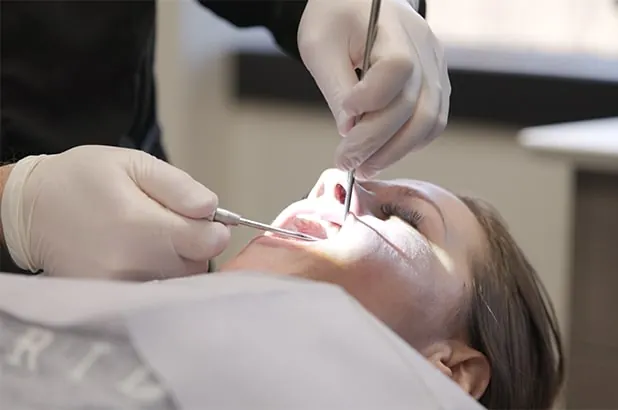
Dr. Lillis examines your mouth, the gaps, the neighboring teeth and your gums, and takes photographs, X-rays, intraoral scans and a record of how your teeth meet. He looks at the whole bite, because a missing tooth often lets the teeth around it drift or tip.
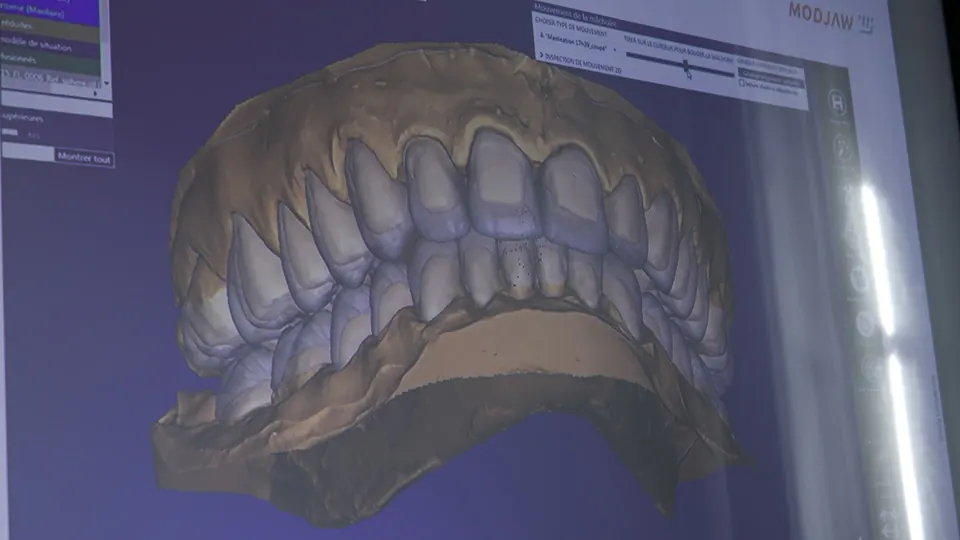
You hear whether an implant, a bridge, or another option fits best, how many implants you need, whether you need bone or gum work first, and how long each stage takes. Each option comes with a written cost.
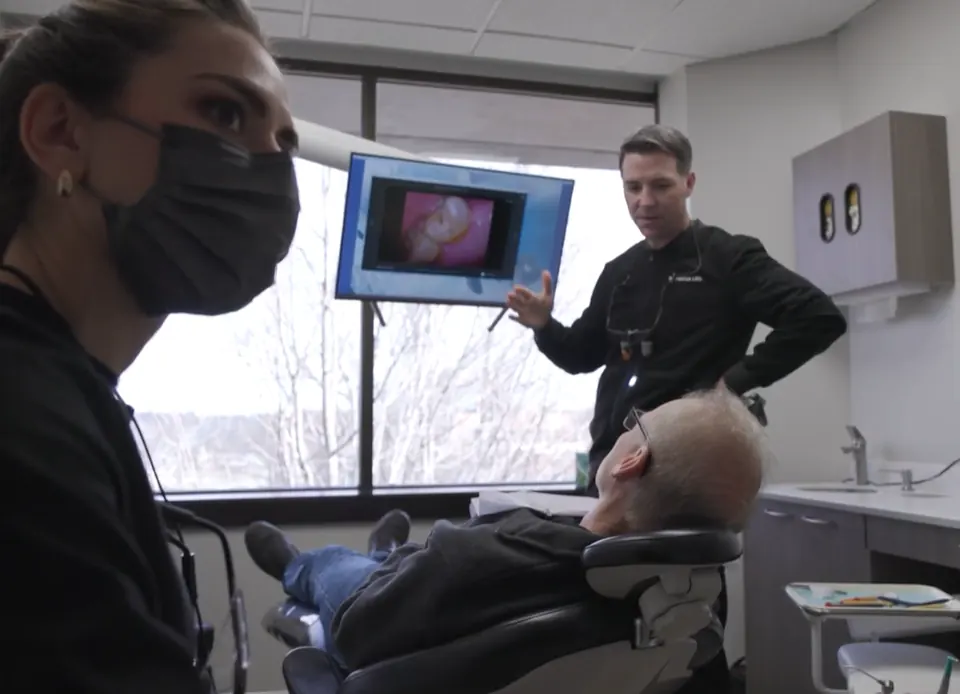
If a damaged tooth is still in place, we remove it first. If the bone is too thin, a bone graft builds it up, and the graft takes several months to heal.
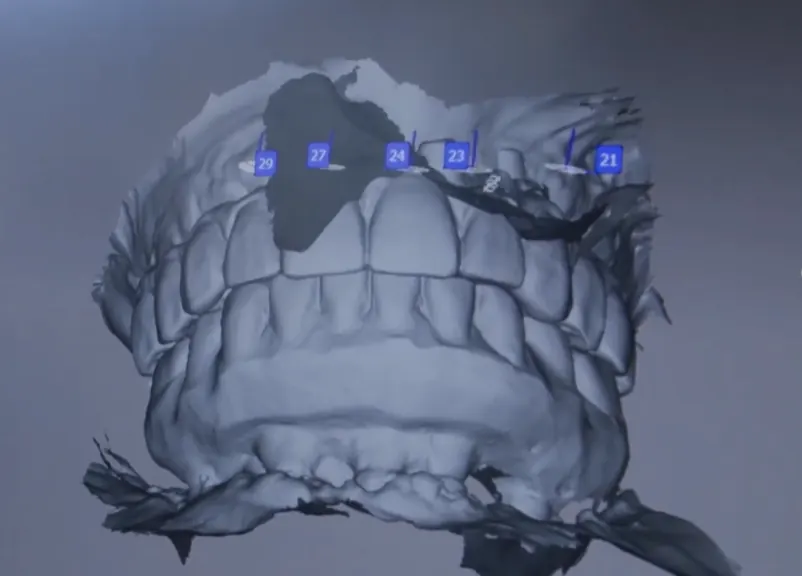
Under local anesthesia, the implant post goes into the jawbone through a small opening in the gum. Most people describe pressure as the main sensation.
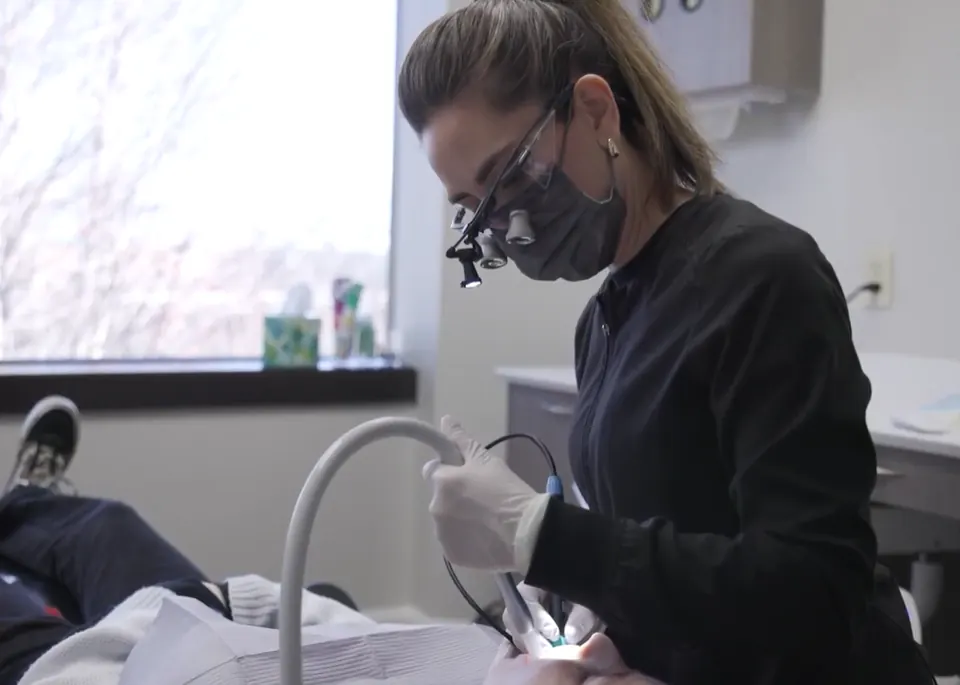
Over three to nine months, the bone grows around the implant and locks it in place. You wear a temporary tooth or denture so you are never without teeth in the front of your smile.
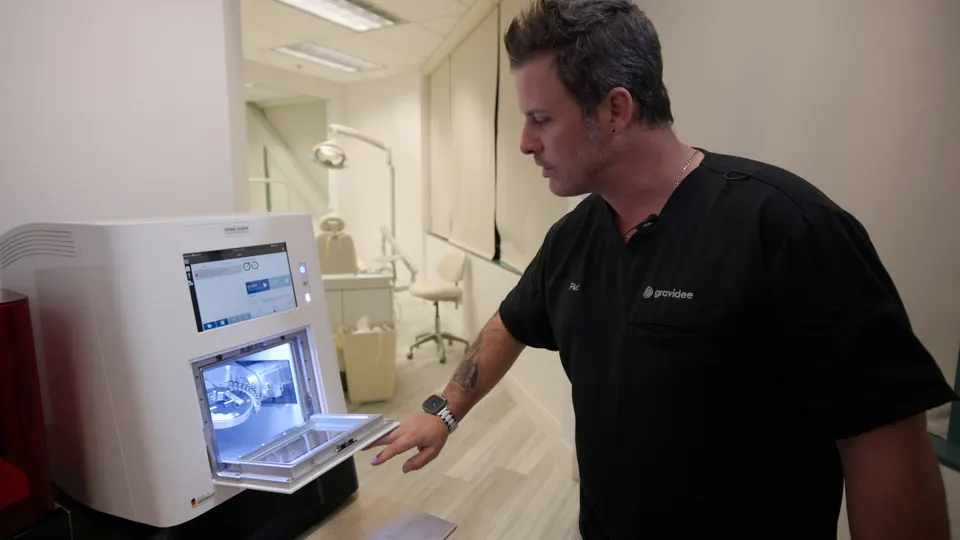
Once the implant has fused, Dr. Lillis attaches a connector and takes scans for the final crown, bridge, or denture. The ceramist builds the ceramic by hand to match the adjacent teeth, and Dr. Lillis checks your bite with the new tooth in place.
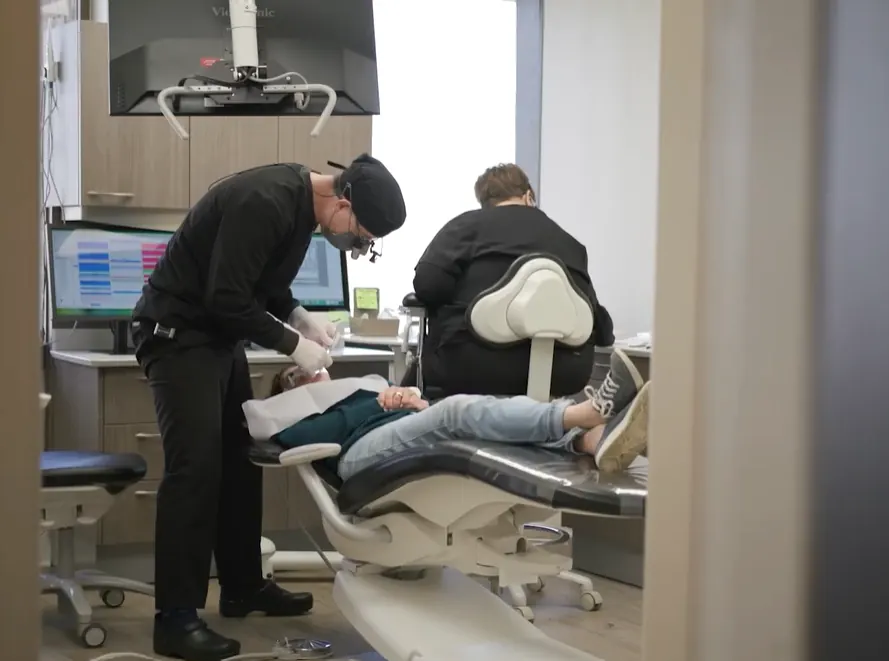
An implant can't decay, but the gum and bone around it can become inflamed. Dr. Lillis and your hygienist check the implant at every one-hour hygiene visit, with a stored intraoral scan each time, so changes around the implant show up early.
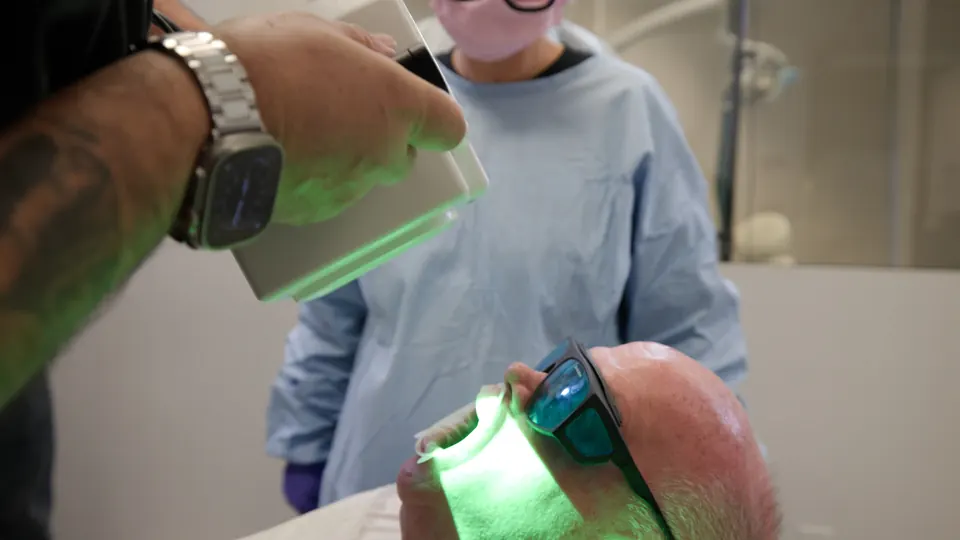
Dental implants last a long time when the bite and gums stay healthy. A systematic review in the Journal of Dentistry found 96.4% of implants were still in place after ten years.
The crown on top wears like any restoration and may need replacing after many years, while the implant post stays in the bone. Heavy grinding, smoking, and gum inflammation around the implant are the main things that shorten an implant's life.
Most people feel pressure during placement and mild soreness for a few days afterward. Local anesthesia numbs the area, and initial recovery usually takes about a week.
Soft foods, cold packs, and over-the-counter pain relievers help most people recover.
Age alone doesn't rule out implants. What matters is your bone, your gums, and your general health.
A large share of the patients at this practice are 60 or older, and they want replacement teeth that look like teeth. The same planning and hand-layered ceramic that goes into veneers goes into their implant crowns.
“They don't want chiclets. They want teeth that look like teeth. Pretty, but natural.”
For people missing most of their teeth, a full-arch implant or an implant-supported denture replaces a loose denture with teeth that stay put.
A team plans complex implant cases here: Dr. Lillis, an oral surgeon, and, when teeth need to move, an orthodontist.
One of those cases started when an oral surgeon referred a girl born without eight permanent teeth when she was about ten. The team held space for the missing teeth through her teens, and she received her implants once she had finished growing. She is now an adult with a career.
When implants are part of a larger rebuild, the plan follows the same process as full-mouth rehabilitation: records, a digital design, temporaries you approve, and then the ceramist makes the final teeth to match.
Dr. Patrick B. Lillis completed a two-year Advanced Education in General Dentistry residency at the UMKC School of Dentistry, treating complex implant, cosmetic, and reconstructive cases under attending faculty.
At thirteen, he worked in his grandfather's dental laboratory, waxing and casting. He opened Overland Park Dental Design in July 2004 and lectures to other dentists through Seattle Study Club.

5.0 on Google · 32 reviews
Dr. Lillis and his team are beyond amazing! From my first consultation to the end result I couldn't have asked for a better experience. They take care of you from the moment you walk in the door. Truly impressed with their concierge approach to dental care. Can't thank them enough!
Everyone at OP Dental Design is so sincere, and truly listen to what your goals are. I spent a majority of my childhood seeing Dr. Lillis due to the fact that I was born without 8 permanent molars. It’s incredible to see how far we’ve come as a team - he made the outcomes look flawless. There’s a reason I continue to see Dr. Lillis and his team for all my regular check ins today. I’ll always recommend Dr. Lillis to family and friends in Kansas City who are looking for a dentist who truly cares!
Their team is detail oriented. You don't leave their office unless everything is perfect. I had major dental work performed. Since then I've received numerous compliments from family, friends & strangers about my new smile.
The cost of a dental implant depends on how many teeth you are replacing, whether you need a bone graft or an extraction first, and what goes on top: a single crown, a bridge, or a full arch.
After your consultation, you receive a written plan with the cost of each stage, so you know what the surgery, healing phase, and final teeth cost. You can phase larger cases over time.
Overland Park Dental Design is in the Foxhill Medical Building at 109th and Roe, just off I-435 at Roe Avenue, on the line between Overland Park and Leawood. Patients come from Leawood, Prairie Village, Mission Hills, Olathe, Lenexa, and across the Kansas City metro.
Overland Park Dental Design, Patrick B. Lillis, DDSUsually three to nine months from placement to the final tooth, because the bone needs time to fuse to the implant. A bone graft or an extraction first adds a few more months.
Implants need minor surgery, take months to finish, and cost more up front than a bridge or denture. They also need healthy gums and enough bone, and smoking raises the risk of failure.
For a single missing tooth with healthy neighbors, an implant usually is, because a bridge requires shaping the teeth on either side. A bridge can make sense when the neighboring teeth already need crowns.
The implant post can last a lifetime with good care, and a systematic review found that 96.4% of implants were still in place at ten years. The crown on top may need replacing after many years.
For most people missing a tooth, yes. An implant protects the neighboring teeth, keeps the jawbone in use, and lets you chew normally, which a denture and a bridge can't fully match.
Local anesthesia numbs the area during placement, and most people manage the soreness afterward with over-the-counter pain relievers. Initial recovery takes about a week.
Often, yes. A bone graft can rebuild thin bone, and the implant goes in once the graft has healed. Some full-arch designs use the bone you already have.
No. Your health, bone, and gums matter more than your age.
It depends on the number of implants, any grafting or extractions, and what goes on top. After your consultation, you'll receive a written plan with the cost of each stage.
If you are missing a tooth, wearing a denture you don't like, or have been told you need an implant, the consultation gets you a diagnosis, your options, and written costs. You decide from there.