4601 West 109th Street, Suite 318, Overland Park, KS 66211 Accepting new patients (913) 451-7330
Reviewed by Patrick B. Lillis, DDS · Updated September 2026

Implant Dentures in Overland Park, KS

An implant denture is a full set of replacement teeth that attaches to dental implants in your jaw instead of resting on your gums. A snap-in denture clips onto two or more implants and comes out for cleaning, while a fixed implant denture stays in and only comes out at the dental office.

At Overland Park Dental Design, Dr. Patrick B. Lillis, DDS, plans the denture first and places the implants where the teeth need support, so the bite works and the denture stays put. The office sits at 109th and Roe in Overland Park, on the Leawood line.

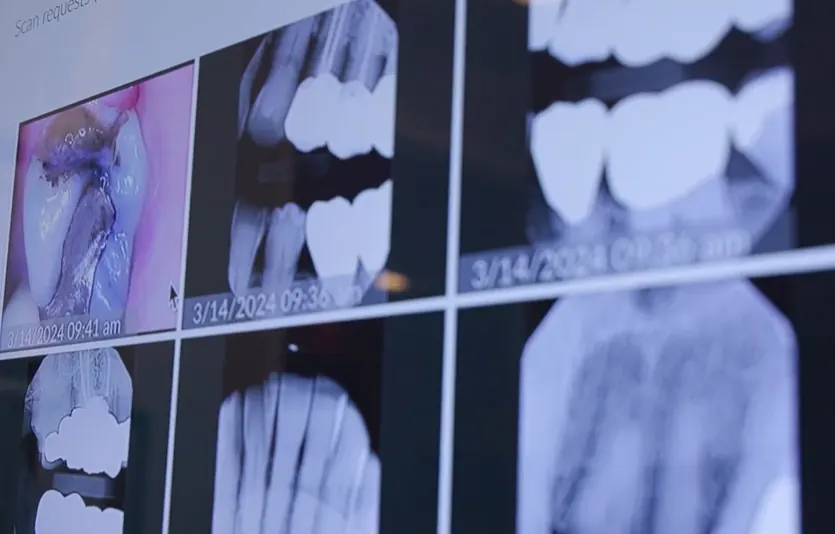
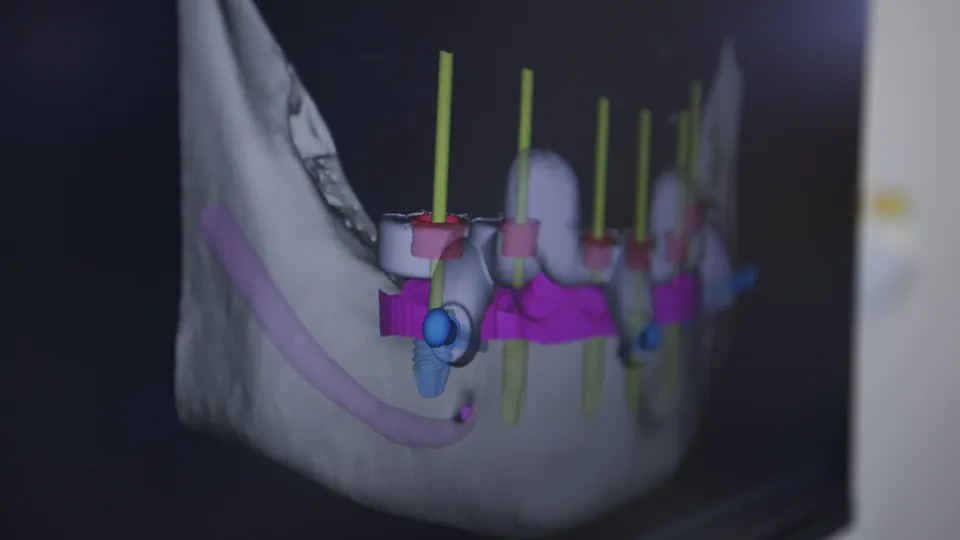
Digital implant plan for a lower jaw at Overland Park Dental Design
  • Snap-in dentures for loose upper and lower dentures
  • Fixed implant dentures when you want teeth that stay in
  • The denture designed first, the implants placed to support it
  • Complex cases planned as a team with an oral surgeon
  • Practicing in Overland Park since 2004, one dentist, one location

Traditional vs snap-in vs fixed implant dentures

The more implants hold the teeth, the more the denture feels and works like your own teeth, and the more the treatment costs.

CompareTraditional dentureSnap-in (implant-retained) dentureFixed implant denture
What holds itSuction and adhesiveAttachments that clip onto two or more implantsScrews into four or more implants
Comes outYes, dailyYes, daily, to cleanOnly at the dental office
Stability when chewingCan shift or liftStays in place for most foodsStays fixed
Covers the roof of the mouthYes, for an upperOften not, with enough upper implantsNo
SurgeryNoneImplant placementImplant placement
Upfront costLowestMiddleHighest

What are snap-in dentures?

Snap-in dentures, also called snap-on dentures, implant-retained dentures, or overdentures, are removable dentures that click onto attachments on top of dental implants.

The denture has small inserts on the underside that press onto matching attachments on the implants, often a brand called Locator. You feel it click into place, and you pull it off to clean it and your gums at night.

On the lower jaw, two implants usually hold the denture well. The McGill consensus statement named a lower denture on two implants the first-choice standard of care for people with no lower teeth, and a review of the research found higher satisfaction and quality of life with implant-retained lower dentures than conventional ones.

An upper snap-in denture usually needs four or more implants. With enough implants, it can leave the roof of your mouth open, so food tastes and feels more natural.

Who implant dentures help

Implant dentures help people whose traditional denture slips, rubs, or makes eating hard, and people about to lose their remaining teeth who want to skip the loose-denture stage.

  • You use more and more adhesive and the denture still moves
  • Your lower denture lifts when you talk or chew
  • You avoid foods you used to enjoy
  • You have sore spots that keep coming back
  • You're facing extractions and want teeth that stay put afterward

You need enough jawbone for the implants, or a bone graft to rebuild it, and healthy gums. Smoking and uncontrolled diabetes raise the risk of implant problems, so Dr. Lillis works through your health history with you at the first visit.

Removable or fixed: which is right for you?

A snap-in denture costs less and is easier to clean, while a fixed implant denture feels closest to your own teeth and never comes out at home.

Choose a snap-in denture if

You want a big step up in stability from a traditional denture at a lower cost, you like being able to take it out to clean, or you have less bone to work with. Many people can have implants placed under the denture they already wear.
Choose a fixed implant denture if

You want teeth that stay in all the time, don't want anything covering the roof of your mouth, and have enough bone for four or more implants per arch. Fixed teeth take more planning because the bite has to work exactly, which is why Dr. Lillis plans them the same way as full mouth rehabilitation.

The implant denture process step by step

Implant dentures take several months from planning to final teeth, mostly because the bone needs time to fuse to the implants, and you wear a denture the whole time.

  1. Consultation and records

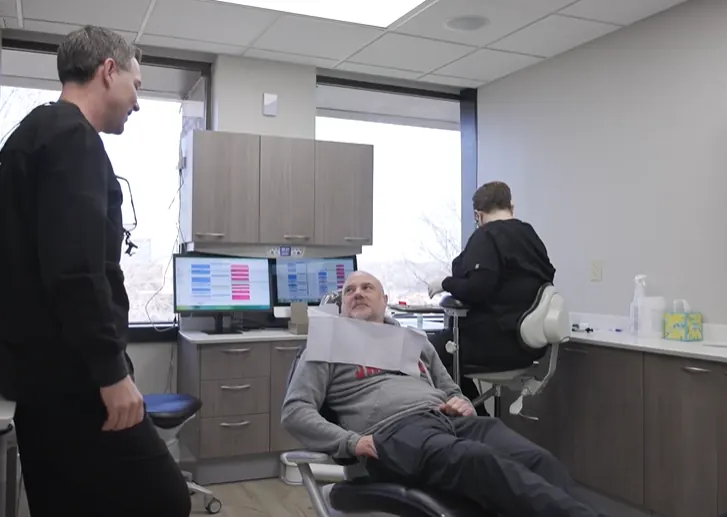
    Dr. Lillis examines your gums, any remaining teeth, your jaw joints, and your current denture, and takes X-rays, scans, and a record of how your jaw closes. He checks where your bone is thick enough for implants and where the teeth need to sit for your bite and your face.

    Consultation and records during implant denture treatment
  2. Your plan and costs

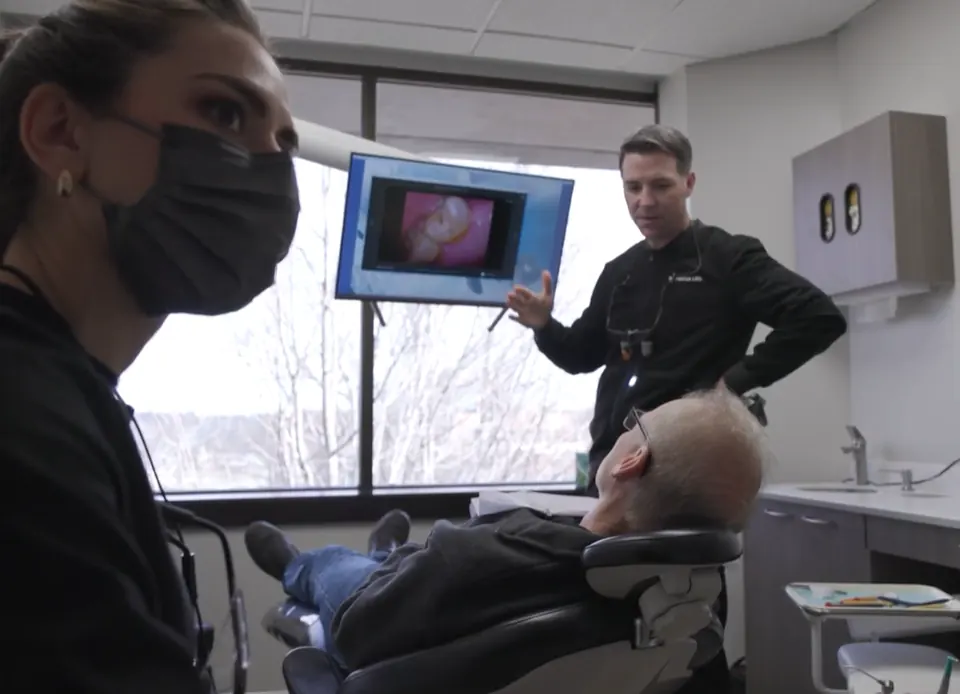
    You hear whether a snap-in or fixed denture fits your mouth, how many implants each option needs, whether you need extractions or bone grafts first, and how long each stage takes. Each option comes with a written cost.

    Your plan and costs during implant denture treatment
  3. Designing the teeth first

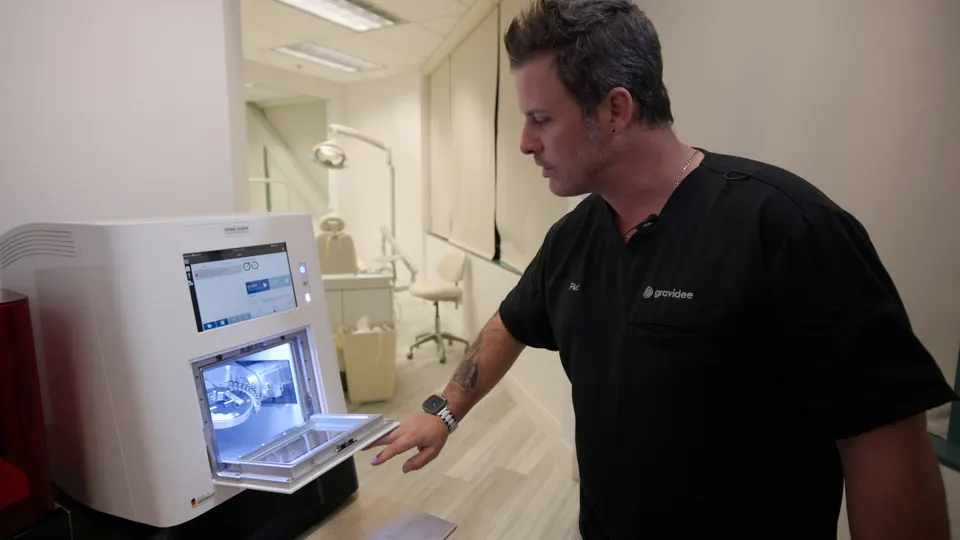
    Dr. Lillis sets up the teeth first, and you check the look and bite in a try-in. The implant positions come from that setup, so the attachments sit where the denture needs them.

    Designing the teeth first during implant denture treatment
  4. Placing the implants

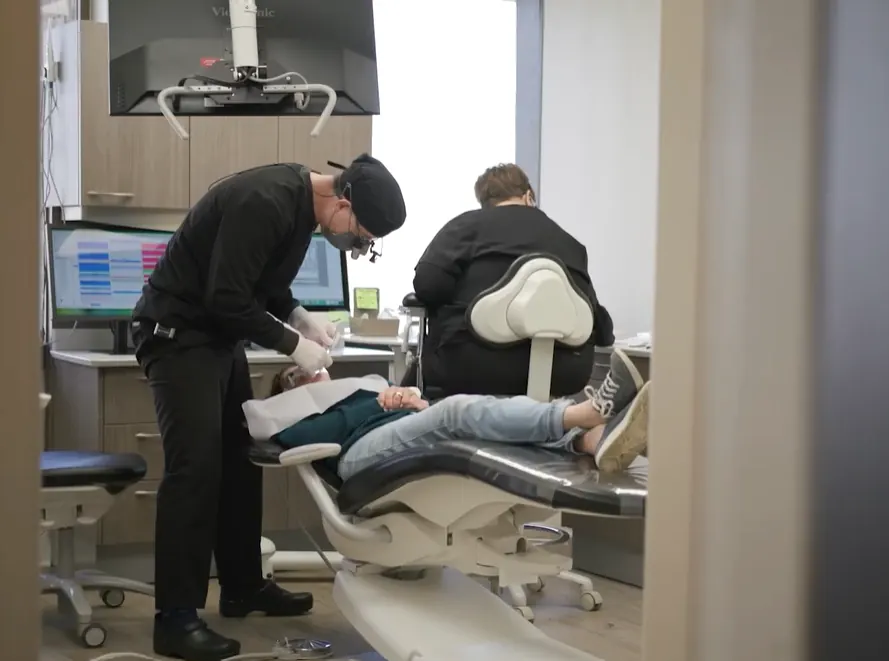
    Under local anesthesia, the implants go into the jawbone. For complex cases, Dr. Lillis plans the surgery with an oral surgeon. Your denture goes back in, adjusted with a soft liner so it doesn't press on the healing implants.

    Placing the implants during implant denture treatment
  5. Healing

    Over the next few months, the bone grows around the implants and locks them in place. Dr. Lillis adjusts your denture during this time to keep it comfortable.

    Healing during implant denture treatment
  6. Connecting the denture

    Once the implants have fused, the attachments go on. For a snap-in denture, Dr. Lillis fits the inserts into your new or existing denture. For a fixed denture, the final teeth screw onto the implants. He checks your bite with everything in place.

    Connecting the denture during implant denture treatment
  7. Keeping it working

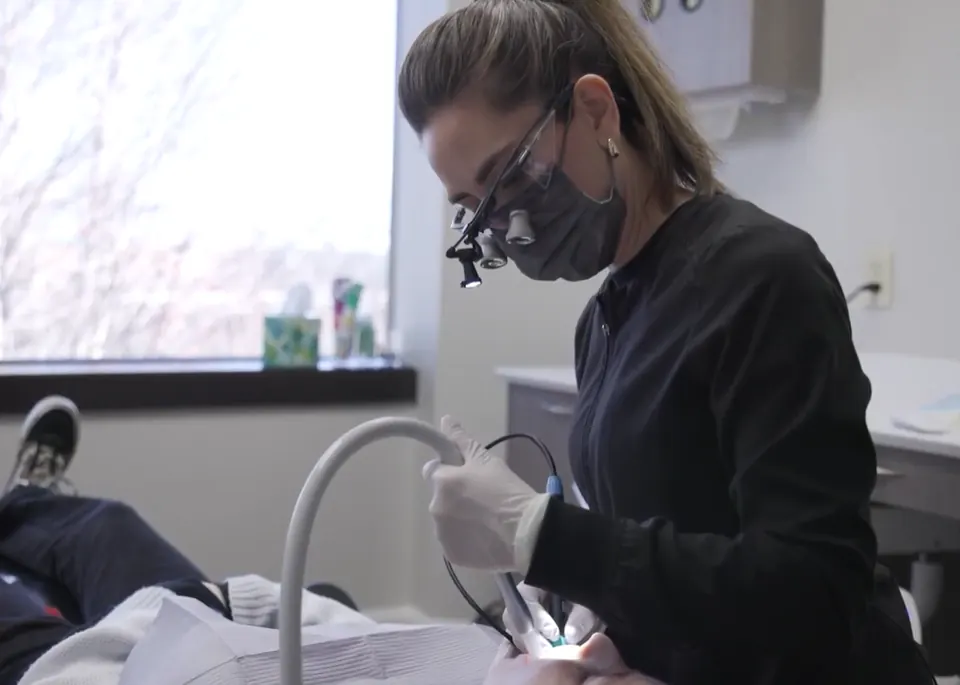
    Your hygienist cleans around the implants and checks the attachments at every one-hour hygiene visit. The inserts in a snap-in denture wear with use, and replacing them is a quick visit that restores the snap.

    Keeping it working during implant denture treatment

Why the bite decides how long implant dentures last

Implant dentures last longest when the bite spreads chewing forces evenly across the implants; a denture that hits hard on one side wears its attachments and strains the implants beneath it.

“We don't just look at one tooth. We look at the entire system. And that's their teeth. That's their airway. That's their jaw muscles. That's their joints.”
Dr. Patrick Lillis

That's why Dr. Lillis designs the teeth first and checks the bite at every stage.

What you can eat with implant dentures

Most people eat a much wider range of foods with implant dentures than with a traditional denture, including apples, salads and cooked meat.

Very hard foods like ice and hard candy can crack denture teeth, and very sticky foods like caramel can pull on a snap-in denture. Start with softer foods while the implants heal, then work back up.

The dentist who plans your implant denture

Dr. Patrick B. Lillis spent two intensive years in an Advanced Education in General Dentistry residency at UMKC School of Dentistry, mastering complex implant, restorative, and reconstructive cases under renowned attending faculty.

Crafting dental restorations is in his DNA. At just thirteen, he was already waxing and casting in his grandfather's dental lab. Today, he evaluates denture setups with the refined eye of a master technician.

Since opening Overland Park Dental Design in July 2004, Dr. Lillis has brought unrivaled precision to his practice while actively shaping the future of dentistry by lecturing to peers through the prestigious Seattle Study Club.

Meet Dr. Lillis

Dr. Patrick B. Lillis, DDS

What patients say

5.0 on Google · 32 reviews

Dr. Lillis and his team are beyond amazing! From my first consultation to the end result I couldn't have asked for a better experience. They take care of you from the moment you walk in the door. Truly impressed with their concierge approach to dental care. Can't thank them enough!

Marlo Mohlman · Google review

Everyone at OP Dental Design is so sincere, and truly listen to what your goals are. I spent a majority of my childhood seeing Dr. Lillis due to the fact that I was born without 8 permanent molars. It’s incredible to see how far we’ve come as a team - he made the outcomes look flawless. There’s a reason I continue to see Dr. Lillis and his team for all my regular check ins today. I’ll always recommend Dr. Lillis to family and friends in Kansas City who are looking for a dentist who truly cares!

Emery Braun · Google review

This office is the best!! Dr.Lillis and the staff are very professional and I wouldn’t have anyone else do my dental work! They are very kind and compassionate!

Connie Laney · Google review

Read all 32 reviews on Google

What implant dentures cost in Overland Park, KS

The cost of implant dentures depends on how many implants you need, whether the denture snaps in or stays fixed, whether you need extractions or bone grafts, and whether Dr. Lillis can convert your current denture.

After your consultation, you receive a written plan with the cost of each stage, so you can compare a snap-in and a fixed option side by side. You can phase treatment, starting with one arch.

Implant dentures near Leawood, Prairie Village and Kansas City

Overland Park Dental Design is in the Foxhill Medical Building at 109th and Roe, just off I-435 at Roe Avenue, on the line between Overland Park and Leawood. Patients come from Leawood, Prairie Village, Mission Hills, Olathe, Lenexa, and across the Kansas City metro.

Overland Park Dental Design, Patrick B. Lillis, DDS
4601 West 109th Street, Suite 318, Overland Park, KS 66211
(913) 451-7330

Implant denture questions

What are the disadvantages of snap-in dentures?

They need implant surgery and a few months of healing; they cost more than a traditional denture, and the inserts wear and need replacing from time to time. You still take them out every night to clean.

Are snap-in dentures worth it?

For most people with a loose denture, especially a lower one, yes. The implants hold the denture in place when you eat and talk, and research shows people are more satisfied with them than with conventional dentures.

Do snap-in dentures cover the roof of your mouth?

A lower snap-in denture never covers the palate. An upper one can often leave it open when it sits on four or more implants, and with fewer implants it usually still covers it.

How long do implant dentures last?

The implants can last many years with healthy gums and a balanced bite. The denture teeth and base wear like any denture and need relines or replacing over time, and snap-in inserts need replacing more often.

Can I use my current denture with implants?

Sometimes. If your denture fits well and the teeth are in good shape, Dr. Lillis can often fit attachments into it. A worn or poorly fitting denture usually needs replacing.

How many implants do I need for an implant denture?

Usually two for a lower snap-in denture, four or more for an upper snap-in denture, and four or more per arch for a fixed implant denture.

Can I sleep in snap-in dentures?

Take them out at night to clean them and give your gums a rest, unless Dr. Lillis tells you otherwise.

How much would a full set of snap-in dentures cost?

It depends on how many implants each arch needs, any extractions or grafting, and whether you convert your current denture. You receive a written cost for each option after your consultation.

Book an implant denture consultation in Overland Park

If your denture slips, rubs, or keeps you from eating what you want, the consultation shows you whether snap-in or fixed teeth fit your mouth and what each one costs.

We'll call you back within one business day. Please don't include medical details in this form.

Call Book

Book a consultation

Tell us a little about what you need and the office will call you back within one business day. Prefer to talk now? Call (913) 451-7330.

We'll call you back within one business day. Please don't include medical details in this form.