
Dentures in Overland Park, KS
Dentures are removable replacement teeth set in a gum-colored base. A full denture replaces every tooth in the upper or lower jaw, a partial denture fills gaps between the teeth you still have, and an implant-supported denture clips onto dental implants so it doesn't slip.
At Overland Park Dental Design, Dr. Patrick B. Lillis, DDS, builds dentures around how your jaw closes, since a denture that sets the bite wrong can cause soreness and loosen early. The office sits at 109th and Roe in Overland Park, on the Leawood line.
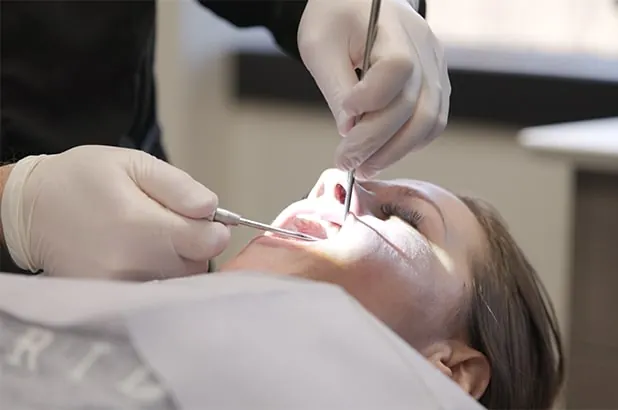
- Full, partial, immediate, and implant-supported dentures
- Bite and jaw joints checked at every step
- Relines and adjustments as your gums change
- A written plan with the cost of each option
- Practicing in Overland Park since 2004, one dentist, one location
Types of dentures compared
The right denture depends on how many teeth you're missing, the health of the teeth you have left, and how much movement you can live with.
| Type | What it replaces | How it stays in | Best for |
|---|---|---|---|
| Full denture | All teeth in the upper or lower jaw | Suction against the gums, sometimes with adhesive | People missing every tooth in an arch |
| Partial denture | Several missing teeth in an arch | Clasps that hold onto your remaining teeth | People with healthy teeth on both sides of the gaps |
| Immediate denture | Teeth removed the same day | Suction, with relines as the gums heal | People who don't want to go without teeth after extractions |
| Implant-supported (snap-in) denture | All teeth in an arch | Attachments that clip onto two or more implants | People whose denture slips, especially on the lower jaw |
Which type of denture is right for you?
Most people choose between a traditional denture and one that snaps onto implants, and the difference shows most in the lower jaw.
Full dentures
An upper full denture covers the roof of the mouth, which gives it a large surface to hold by suction, and many people wear one comfortably for years. A lower full denture sits on a narrow ridge with the tongue moving underneath it, so it moves more and often needs adhesive.
Partial dentures
A partial denture fills the spaces between your natural teeth and keeps them from drifting into the gaps. Dr. Lillis checks the teeth that will hold the clasps first, since a partial can only last as long as those teeth do.
Immediate dentures
An immediate denture goes in the day your teeth come out, so you leave with teeth. Your gums shrink a lot in the months after extractions, and the denture needs relines during that time to keep fitting.
Implant-supported dentures
An implant-supported denture snaps onto implants in the jaw, so it stays put when you chew and talk. The McGill consensus statement named a lower denture on two implants the first-choice standard of care for people with no lower teeth.
Learn more about dental implants.
Dentures vs implants
Dentures replace teeth at a lower upfront cost and without surgery, while implants replace the roots too, so the teeth stay fixed and the jawbone under them holds its shape.
| Compare | Traditional denture | Implant-supported denture | Implants with fixed teeth |
|---|---|---|---|
| Stability | Can shift when you chew or talk | Clips in place, comes out to clean | Fixed, doesn't come out |
| Surgery | None, beyond any extractions | Implant placement | Implant placement |
| Jawbone | Keeps shrinking under the denture | Implants help hold bone where they sit | Implants help hold bone where they sit |
| Upfront cost | Lowest | Higher | Highest |
A traditional denture is a good option when surgery isn't right for you, and many people start there and add implants later to hold the same denture.
How dentures are made at Overland Park Dental Design
A new denture usually takes several visits over a few weeks, because each step checks the fit, the bite, and the look.
Exam and records
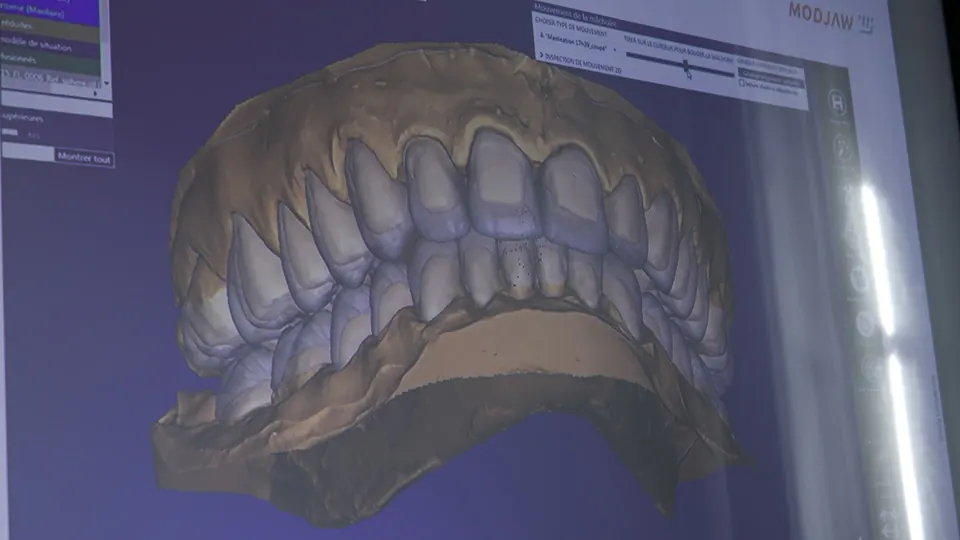
Dr. Lillis examines your gums, any remaining teeth and your jaw joints, and takes X-rays and impressions. He also records how your jaw closes and how much space your face needs between the upper and lower jaw, since a denture that closes too far or not far enough strains the jaw muscles.
Your options and costs
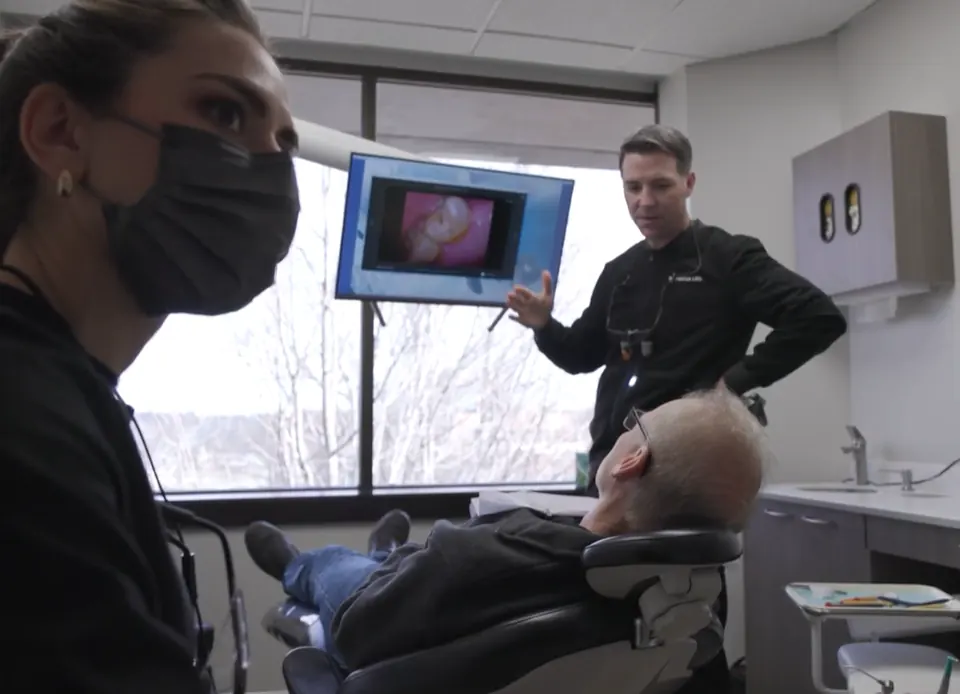
You hear which denture types fit your mouth and what each one involves. Each option comes with a written cost, and you decide from there.
Bite records and tooth selection
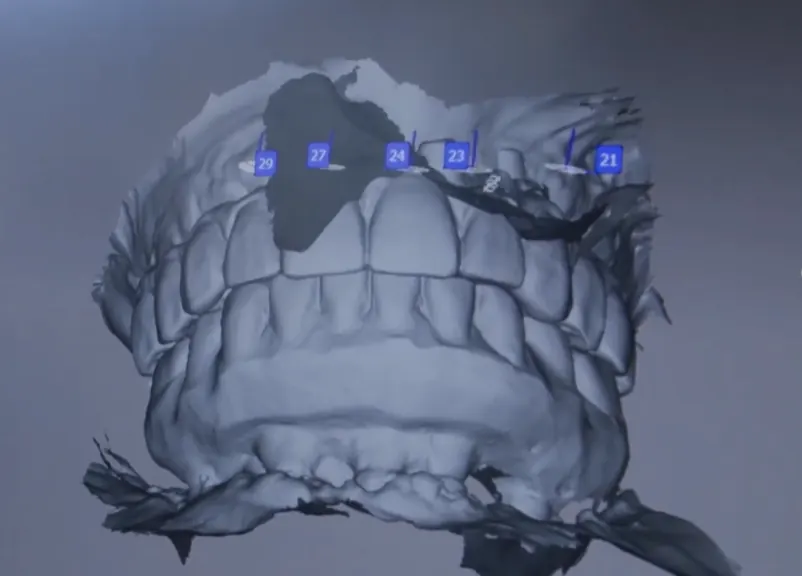
Dr. Lillis sets the bite and chooses the shape, size, and shade of the teeth with you, so the teeth suit your face and your smile line.
The try-in
You try the denture in wax first. You check how it looks, how you speak with it, and how it bites, and Dr. Lillis adjusts the setup until it's right.
Delivery
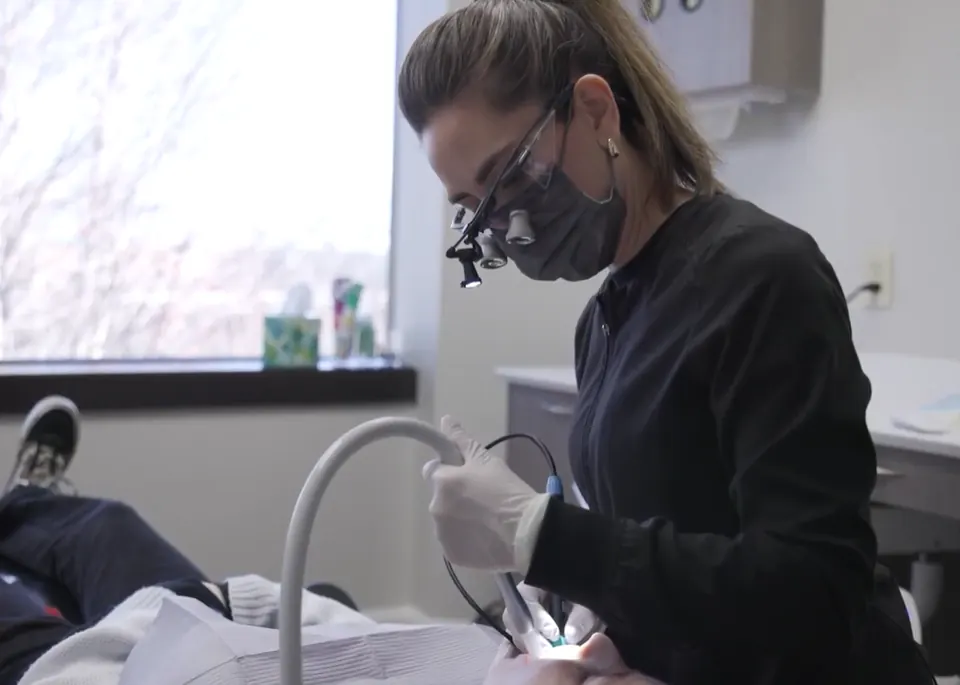
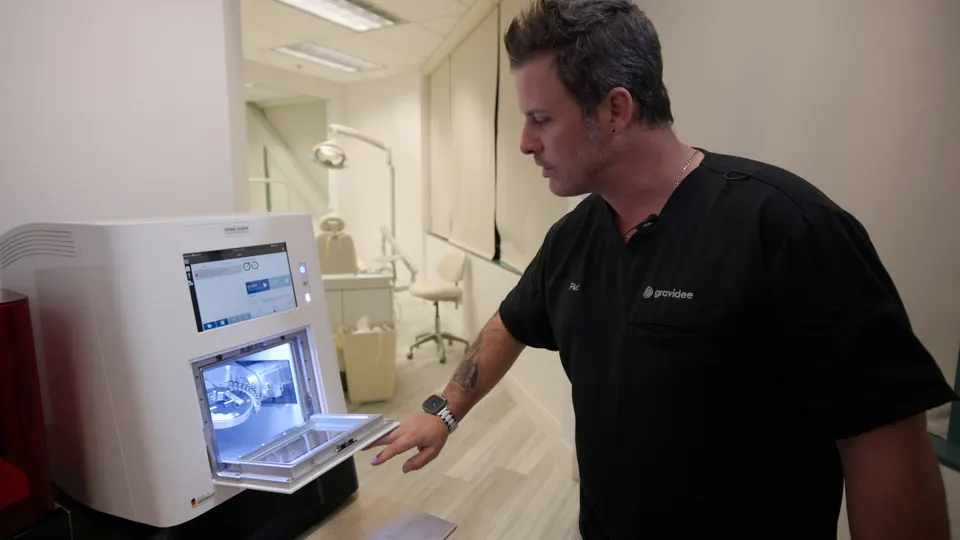
The lab turns the approved setup into your final denture. Dr. Lillis fits it, smooths any pressure spots, and checks your bite again.
Adjustments
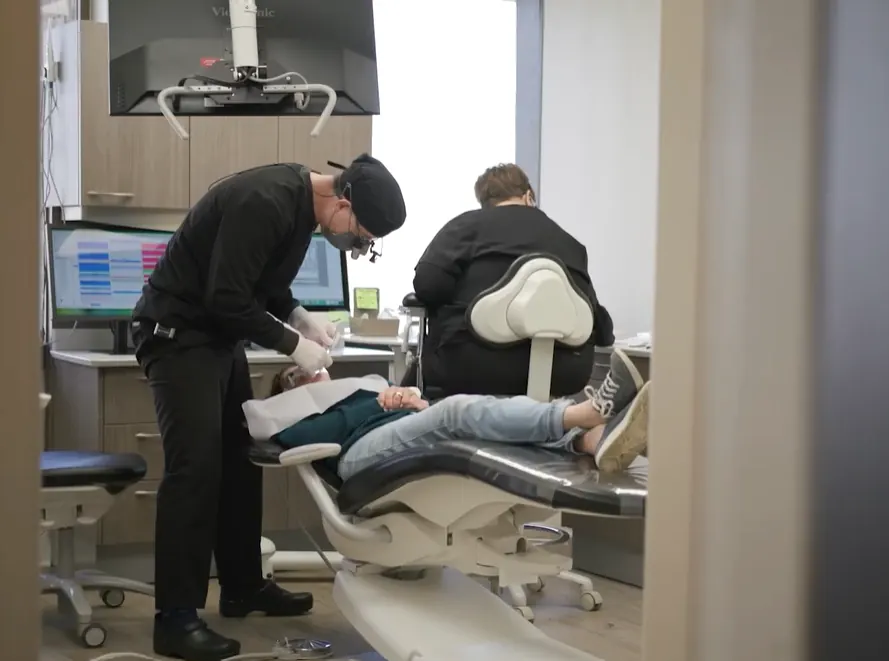
Sore spots are common in the first weeks. Short follow-up visits adjust the denture as your gums settle, and your hygienist checks the fit at every hygiene visit.
Getting used to new dentures
Most people need a few weeks to eat and speak comfortably with a new denture, and the lower one usually takes the longest.
- Start with soft foods cut into small pieces, and chew on both sides at once to keep the denture balanced.
- Read out loud to practice speaking with it.
- Call the office about sore spots instead of waiting them out, since a small adjustment usually fixes them.
- Take the denture out at night so your gums can rest, unless Dr. Lillis tells you otherwise.
Denture relines and care
A reline adds new material to the inside of a denture so it fits your gums again. Your jawbone keeps shrinking after teeth come out, so a denture that fit well can start rubbing or slipping after a few years.
Signs you need a reline or an adjustment:
- You need more adhesive than you used to
- Food gets under the denture
- Sore spots that keep coming back
- The denture clicks or drops when you talk
Brush your denture every day with a soft brush and a non-abrasive cleaner, keep it moist when it's out, and brush your gums and any natural teeth too.
How long do dentures last?
Complete dentures last about ten years on average. A meta-analysis in the Journal of Prosthetic Dentistry found a weighted mean longevity of 10.1 years for complete dentures, with lower dentures wearing out sooner than upper ones.
Relines, regular checks, and a bite that doesn't overload the denture help it last. Worn teeth, cracks in the base, or a fit that relines can no longer fix mean it's time for a new one.
When dentures never feel right
A denture that keeps hurting or slipping often has a bite problem, and a new denture made to the same bite usually feels the same.
“Function is always first. Cosmetics will be a byproduct of proper function.”
Dr. Lillis looks at the whole system: teeth, jaw joints, jaw muscles, and airway. If another office made your denture, a second opinion starts with new records and a new diagnosis. If jaw pain comes with it, TMJ treatment may be part of the plan.
The dentist who makes your dentures
Dr. Patrick B. Lillis earned his degree from the UMKC School of Dentistry and completed a rigorous two-year Advanced Education residency. During this time, he focused on complex restorative, implant, and reconstructive care under expert attending faculty.
Dentistry runs deep in his roots. By age thirteen, he was already waxing and casting in his grandfather's dental lab. Today, he still evaluates every denture setup with a master technician's eye. Dr. Lillis opened Overland Park Dental Design in July 2004 and regularly lectures to fellow dentists through the Seattle Study Club.

What patients say
5.0 on Google · 32 reviews
Dr. Lillis and his team are beyond amazing! From my first consultation to the end result I couldn't have asked for a better experience. They take care of you from the moment you walk in the door. Truly impressed with their concierge approach to dental care. Can't thank them enough!
Everyone at OP Dental Design is so sincere, and truly listen to what your goals are. I spent a majority of my childhood seeing Dr. Lillis due to the fact that I was born without 8 permanent molars. It’s incredible to see how far we’ve come as a team - he made the outcomes look flawless. There’s a reason I continue to see Dr. Lillis and his team for all my regular check ins today. I’ll always recommend Dr. Lillis to family and friends in Kansas City who are looking for a dentist who truly cares!
This office is the best!! Dr.Lillis and the staff are very professional and I wouldn’t have anyone else do my dental work! They are very kind and compassionate!
What dentures cost in Overland Park, KS
The cost of dentures depends on the type, how many teeth you need to replace, whether you need extractions first, and whether the denture attaches to implants.
After your exam, you receive a written plan with the cost of each option. Many dental plans cover part of a denture, and your coverage depends on your plan.
Dentures near Leawood, Prairie Village and Kansas City
Overland Park Dental Design is in the Foxhill Medical Building at 109th and Roe, just off I-435 at Roe Avenue, on the line between Overland Park and Leawood. Patients come from Leawood, Prairie Village, Mission Hills, Olathe, Lenexa, and across the Kansas City metro.
Overland Park Dental Design, Patrick B. Lillis, DDS4601 West 109th Street, Suite 318, Overland Park, KS 66211
(913) 451-7330
Denture questions
What are the four types of dentures?
Full dentures, partial dentures, immediate dentures, and implant-supported dentures. Full and partial dentures differ by how many teeth they replace; immediate dentures go in the day teeth come out, and implant-supported dentures clip onto implants.
What is the best type of denture to get?
It depends on how many teeth you're missing and the shape of your jaw. For a full lower denture, one that snaps onto two implants stays in place far better than a traditional one, and dental researchers call it the first-choice standard of care.
What is the newest type of denture?
Digital dentures, designed on a computer from scans and then milled or 3D printed. They make a spare copy easier to produce, and the fit still depends on accurate bite records.
Are snap-in dentures worth it?
For most people with a loose lower denture, yes. Implants hold the denture in place when you chew and talk, and the denture still comes out for cleaning.
How much do dentures cost in Kansas?
In Kansas, traditional dentures average around $1,800–$2,000, while individual dentures can range from about $500 to $2,400+ per arch, depending on the materials and type. Extractions, implants, or other treatment can increase the total cost.
How long does it take to get dentures?
Usually several visits over a few weeks for a traditional denture. Immediate dentures go in the day of extractions, and implant-supported dentures take longer because the implants need time to heal.
Can I sleep in my dentures?
Most dentists recommend taking them out at night so your gums can rest and the denture can soak clean. Ask Dr. Lillis what fits your situation.
How common is it to lose all your teeth?
The CDC reports that more than 1 in 7 adults aged 65 or older have lost all their teeth.
Book a denture consultation in Overland Park
If you're missing teeth, facing extractions, or your denture never felt right, the consultation shows you which options fit your mouth and what each one costs.