
Gum Disease Treatment in Overland Park, KS
Gum disease treatment removes the bacteria and hardened tartar that inflame the gums and break down the bone around your teeth. Treatment usually starts with a deep cleaning called scaling and root planing and continues with regular maintenance visits. Your hygienist can reverse early gum disease, and treatment can stop and manage the advanced form.
At Overland Park Dental Design, every hygiene visit runs a full hour with the same hygienist, includes saliva testing, and stores an intraoral scan so you and Dr. Patrick B. Lillis, DDS, can see how your gums change over time. The office is at 109th and Roe in Overland Park, on the Leawood line.
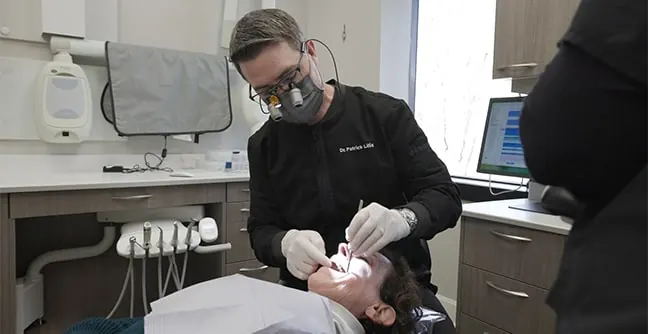
- One-hour hygiene visits with the same hygienist every time
- Saliva testing to see which bacteria are in your mouth
- An intraoral scan at every visit, stored and compared over time
- Deep cleaning when your gums need it, and maintenance visits set by your risk
- No routine antibiotics
Stages of gum disease
Gum disease starts as gingivitis, which affects only the gums, and moves to periodontitis once the infection reaches the bone that holds your teeth.
| Stage | What is happening | What you notice | Reversible? | Usual treatment |
|---|---|---|---|---|
| Gingivitis | Plaque inflames the gum line | Red, puffy gums that bleed when you brush or floss | Yes | A professional cleaning and better home care |
| Early periodontitis | Bacteria move below the gum line, and pockets form between gum and tooth | Bleeding, bad breath, gums that start to pull back | No, but you can stop it | Scaling and root planing, then maintenance visits |
| Moderate periodontitis | Pockets deepen, and the bone around the teeth starts to break down | Receding gums, sensitivity, teeth that look longer | No, but you can stop it | Scaling and root planing, closer maintenance |
| Advanced periodontitis | Bone loss loosens the teeth | Loose or shifting teeth, pus, a bite that changes | No | Deep cleaning, gum surgery by a periodontist, and sometimes tooth replacement |
Signs of gum disease
Gum disease often causes no pain until it is advanced, which is why so many people have it without knowing. About 4 in 10 adults over 30 have some level of periodontitis.
Book a visit if you notice:
- Gums that bleed when you brush or floss
- Red, swollen, or tender gums
- Bad breath or a bad taste that doesn't go away
- Gums pulling back from your teeth
- Teeth that feel loose or have shifted
- A change in how your teeth fit together when you bite
Can gum disease be reversed?
You can reverse gingivitis, and you can stop periodontitis but not undo the bone it has already taken. Treatment can't undo periodontitis, but it can slow and manage the disease.
That is why early treatment matters so much. Gums that bleed today are usually still at the stage where a cleaning and better home care can fix it.
Deep cleaning vs regular cleaning
A regular cleaning removes plaque and tartar above the gum line, and a deep cleaning reaches below it to clean the roots inside the pockets.
| Compare | Regular cleaning | Deep cleaning (scaling and root planing) | Periodontal maintenance |
|---|---|---|---|
| Who it is for | Healthy gums or gingivitis | Periodontitis with pockets below the gum line | Anyone who has had periodontitis treated |
| Where it cleans | Above and just at the gum line | Below the gum line, down the root surfaces | Above and below the gum line |
| Numbing | Usually none | Local anesthetic in the areas treated | Sometimes, in deeper areas |
| Visits | One | Often split into two or more visits by area of the mouth | Ongoing, on a schedule set by your risk |
How gum disease treatment works at Overland Park Dental Design
Treatment starts with measuring where your gums are today, treating what needs treating, and tracking your gums over time so any change shows up early.
A full hygiene exam
Your hygienist measures the pockets around each tooth, checks for bleeding, and looks at recession and loose teeth. X-rays show your bone level, which tells you whether gingivitis has progressed to periodontitis.
An intraoral scan
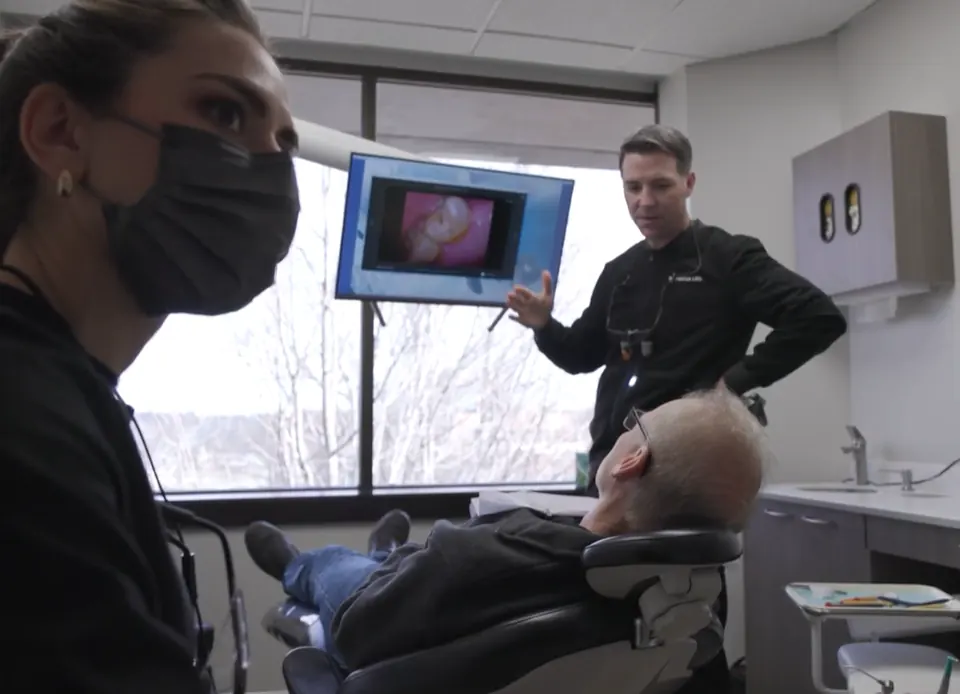
Every hygiene visit includes a 3D intraoral scan of your teeth and gums. The practice stores each scan, so at your next visit you and your hygienist can compare them and see how your gum tissue has changed.
Saliva testing
A saliva test shows which bacteria live in your mouth. That helps explain why some people keep bleeding despite good brushing, and it shapes your home care and maintenance plan.
Diagnosis and your plan
Dr. Lillis and your hygienist explain your stage, which areas need treatment, and how often you should return. Each step comes with a written cost.
Scaling and root planing
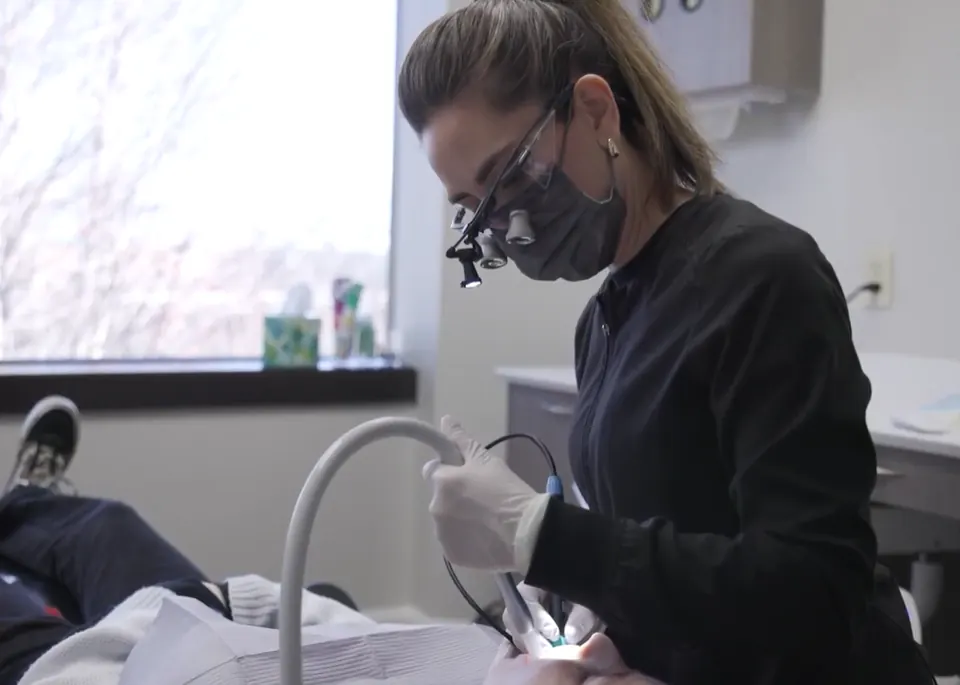
Your hygienist numbs the areas she treats, removes tartar and bacteria from the root surfaces below the gum line, and smooths the roots so the gums can tighten back against them. Most people have this done in two or more visits, a section of the mouth at a time.
The practice stopped using routine antibiotics years ago, so treatment relies on thorough cleaning and follow-up.
“We got out of the antibiotic regimen several years ago because of overuse of antibiotics.”
Maintenance visits
After treatment, you come back for periodontal maintenance on a schedule based on your risk. Research on recall intervals finds little support for one fixed schedule for everyone, so your stored scans and your pocket measurements set the interval, and your hygienist shortens or lengthens it as your gums change.
These visits follow the Measure Protocol, the practice's hygiene system built around measuring your mouth at every visit.
Is a deep cleaning necessary?
A deep cleaning is necessary when bacteria and tartar sit below the gum line in pockets a regular cleaning can't reach. Leaving them there lets the pockets deepen and the bone keep breaking down.
A systematic review for the American Dental Association found that scaling and root planing reduces pocket depth and improves gum attachment in people with chronic periodontitis. The biggest benefit comes from keeping up with maintenance afterward.
Receding gums
Receding gums pull back from the teeth and expose the root, and periodontitis, hard brushing and grinding are common causes.
The first step is stopping the cause, whether that is gum disease, brushing technique or grinding. Gum tissue that has receded doesn't grow back on its own.
Where recession leaves dark gaps between the front teeth, Dr. Lillis can close those spaces with ceramic as part of cosmetic work, and a periodontist can rebuild lost gum with a graft when the root needs covering.
“Closing spaces, closing gaps where they've had gum tissue that's receded away. We close all those spaces with ceramic.”
Gum disease and your overall health
Gum disease is an inflammation that doesn't stay in the mouth, and research links it with heart disease and diabetes.
- Heart health. A consensus report from periodontal and cardiology experts found consistent evidence linking periodontitis with cardiovascular disease. The research shows an association, and it doesn't prove that gum disease causes heart disease.
- Diabetes. A Cochrane review found that treating periodontitis lowered HbA1c, a measure of long-term blood sugar, in people with diabetes.
That is why the practice treats hygiene as part of your overall health, an approach it calls longevity dentistry.
“We're getting more into putting the mouth back into the body.”
Who treats your gums in Overland Park?
You see the same hygienist every time. She has worked in hygiene full-time for more than twenty years, and she was also Bernie Williams's hygienist.
Dr. Patrick B. Lillis completed a two-year Advanced Education in General Dentistry residency at the UMKC School of Dentistry. He opened Overland Park Dental Design in July 2004 and lectures to other dentists through Seattle Study Club.


What patients say
5.0 on Google · 32 reviews
Shanda is great at her medical care, a great communicator to help you understand your dental health, and always professional and thorough. Dr. Lillis is great an patient care, clear dental communication for the patient, personal care and interest and he has developed a very positive office culture. Visiting the dentist is something to look forward to!!
Everyone at Dr, Lillis's office are very pleasant and helpful. Shanda Overbeck is the best Dental Hygienist. She is personable, friendly, and professional. She is very good at her work and determined. I highly recommend her.
As is always the case, my appointment went great from start to finish and I really appreciated the proactive approach they take to ensure things stay on track!
What gum disease treatment costs in Overland Park, KS
The cost depends on the stage of gum disease and how many areas of the mouth need deep cleaning. A regular cleaning costs less than scaling and root planing.
After your exam you receive a written plan with the cost of each step. Coverage for scaling and root planing and periodontal maintenance varies by dental plan.
Gum disease treatment near Leawood, Prairie Village and Kansas City
Overland Park Dental Design is in the Foxhill Medical Building at 109th and Roe, just off I-435 at Roe Avenue, on the line between Overland Park and Leawood. Patients come from Leawood, Prairie Village, Mission Hills, Olathe, Lenexa and across the Kansas City metro.
Overland Park Dental Design, Patrick B. Lillis, DDS4601 West 109th Street, Suite 318, Overland Park, KS 66211
(913) 451-7330
Gum disease questions
Can gum disease be cured?
A professional cleaning and good home care can cure gingivitis. Periodontitis has no cure, but treatment stops it from getting worse, and maintenance visits keep it under control.
How do I know if I have gum disease?
Bleeding when you brush or floss is the most common early sign. Red or swollen gums, bad breath, receding gums, and loose teeth point to more advanced disease. An exam with pocket measurements and X-rays tells you for sure.
Does a deep cleaning hurt?
Your hygienist numbs the areas she treats, so most people feel pressure and scraping without pain. Your gums may feel tender and sensitive to cold for a few days afterward.
How often should I have my teeth cleaned if I have gum disease?
Many people start with shorter intervals than a routine six-month cleaning, and the right interval depends on your risk. Your pocket measurements and stored scans show whether your gums are stable, and your hygienist adjusts the schedule from there.
Can I treat gum disease at home?
You can reverse gingivitis at home with better brushing and flossing after a professional cleaning. Tartar below the gum line needs professional removal, so periodontitis needs treatment in the office.
What is periodontal maintenance?
Periodontal maintenance is a cleaning for people who have had periodontitis treated. It cleans above and below the gum line and checks your pockets, on a schedule based on your risk.
Is gum disease linked to heart disease?
Research shows an association between periodontitis and cardiovascular disease, but it doesn't prove that one causes the other. Treating gum disease lowers inflammation in your mouth either way.
Do you use antibiotics for gum disease?
Not routinely. The practice moved away from routine antibiotics years ago and relies on thorough cleaning, home care, and maintenance visits.
What is a saliva test for gum disease?
A saliva test shows which bacteria are in your mouth. It helps explain why some people's gums stay inflamed and guides home care and how often you come back.
Book a gum health visit in Overland Park
If your gums bleed, feel tender, or have started to pull back, a one-hour hygiene visit tells you what stage you are at and what it takes to stop it. You decide from there.