A same-day crown is designed from a digital scan and milled from a single block of ceramic in the dental office, so it goes on in one visit. A lab crown is made by a dental technician over a few weeks while you wear a temporary. On back teeth, same-day crowns hold up well, with about 80% still in place after 15 years in one long-term study.
The bigger difference shows on front teeth. A technician can build a crown in layers that copy the color and translucent edge of the tooth beside it, and a crown milled from one block has a harder time doing that.
Every crown I place comes from a small ceramics studio in West Hollywood, California, where a technician builds the ceramic by hand. A same-day crown can still be a sound choice on the right tooth, and the research below shows where each one fits.
The choice comes down to which tooth needs the crown, how your bite hits it, and how closely the color has to match.
Same-day vs lab crowns at a glance
| Compare | Same-day crown | Lab crown |
|---|---|---|
| Where it's made | In the dental office, during your appointment | At a dental laboratory, by a technician |
| How it's made | Designed on screen and milled from one block of ceramic | Milled, pressed, or built up by hand in layers |
| Visits | One | Two, with lab time in between |
| Temporary crown | None | Worn for the weeks the lab needs |
| Materials | Ceramic blocks, usually lithium disilicate or zirconia | Ceramic, layered porcelain, metal-ceramic or gold |
| Color | Mostly one shade, with stain added on the surface | Can be layered for depth and a translucent edge |
| Long-term research | About 80% still in place after 15 years on back teeth, in one study | Similar five-year survival across common crown materials, in a systematic review |
| Usually fits | A single back tooth with a healthy bite | Front teeth, several teeth at once, or a bite that needs planning |
What is the difference between a same-day crown and a lab crown?
A same-day crown is made in the dental office during your appointment, and a lab crown is made by a technician at a dental laboratory. The tooth is prepared the same way for both.
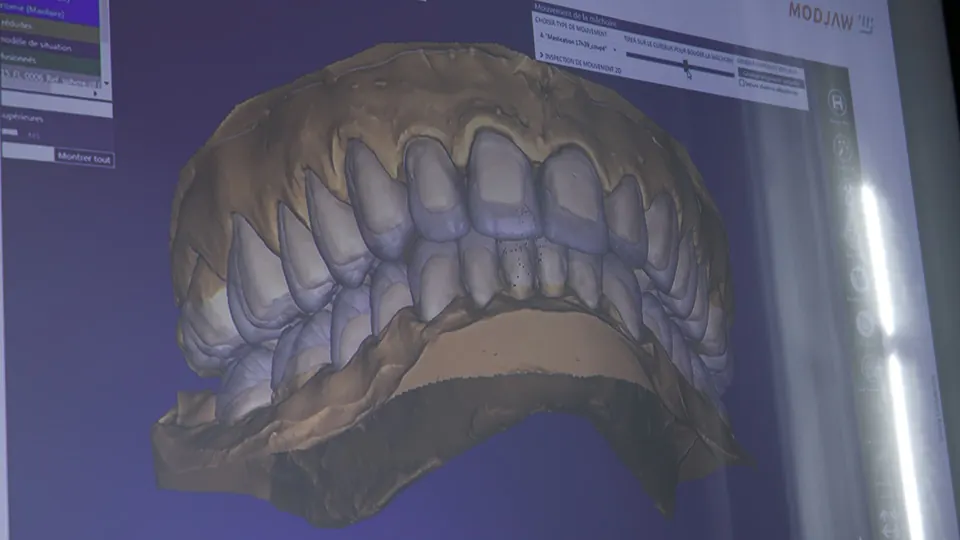
For a same-day crown, the dentist scans the prepared tooth, designs the crown on screen, and sends the design to a milling machine in the office. The machine carves the crown from a solid block of ceramic. Lithium disilicate blocks are milled in a softer state and then fired in an oven to reach full strength.
Same-day crowns also go by CEREC crowns, one-visit crowns, and CAD/CAM crowns. CEREC is a widely used in-office system made by Dentsply Sirona.
For a lab-made dental crown, your scan goes to a dental lab, and you wear a temporary crown while the lab works. The technician can mill the crown, press it from heated ceramic, or build porcelain up by hand in layers.
Many labs mill crowns from the same kinds of blocks an office mill uses, so a lab crown can be machine-made too. Whichever route you take, ask how your crown will be made.
How long do same-day crowns last?
Same-day crowns on back teeth hold up well over the long term. In a 15-year study, about 80% of same-day lithium disilicate crowns were still in place.
The study, published in Clinical Oral Investigations, followed 34 same-day crowns on back teeth placed in 2006 and 2007. Six crowns failed. One failure involved the crown itself, and five involved the tooth or gums around it.
The color and the crowns themselves stayed stable over 15 years. The surfaces grew rougher, and the cement line around most crowns darkened, which the authors flagged as a possible problem for looks.
It's one small study, and long-term research on same-day crowns is limited. What it shows is still useful, because when these crowns failed, the tooth underneath was usually the reason.
That's why your hygienist checks the edge of every crown at each one-hour hygiene visit here. Each visit includes a stored intraoral scan, so we can see decay or gum changes at the edge of a crown early.
Are lab crowns stronger than same-day crowns?
A crown's strength comes mainly from its material, so what the crown is made of matters more than where it's made. Metal-ceramic and lithium disilicate crowns lasted about the same in research.
A systematic review in Dental Materials found 94.7% of metal-ceramic crowns and 96.6% of lithium disilicate and similar glass-ceramic crowns still in place after five years. Zirconia crowns came in at 92.1%, and feldspathic porcelain crowns had lower survival than the rest.
Lithium disilicate is a common same-day material, so a same-day crown made from it rests on solid evidence.
Hand-layered porcelain looks the most lifelike, and on its own it's the weaker material. That's why a layered crown is built over a stronger core, and why the bite has to be planned with care.
Back teeth take the heaviest chewing force, and that's also where the 15-year same-day research comes from. Grinding and a bite that overloads one tooth shorten the life of crowns made either way.
Do same-day crowns look as natural as lab crowns?
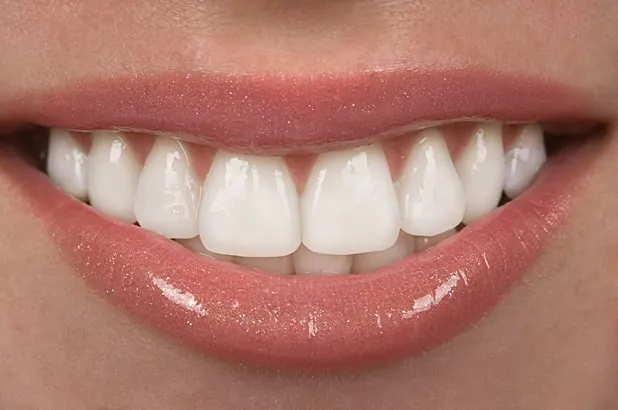
On a front tooth, a layered lab crown usually matches natural teeth more closely than a crown milled from one block. Back teeth hide most of that difference, because they barely show when you smile.
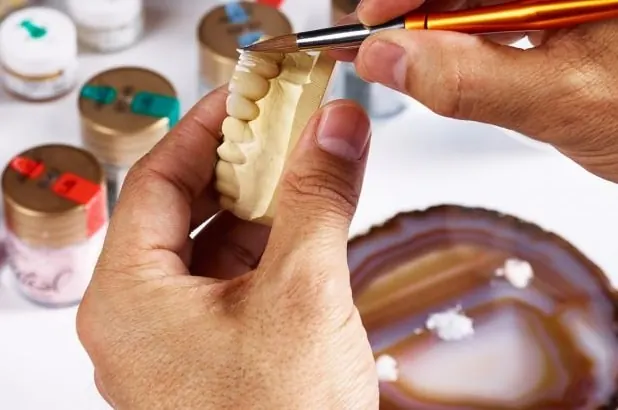
A natural tooth has a denser, warmer layer inside and translucent enamel outside, and light passes through the biting edge. A milled crown comes from a block that is mostly one shade, with color painted on the surface. A ceramist builds a layered crown in stages that copy dentin and enamel, and fires each layer in turn.
In a study in Clinical Oral Investigations, researchers made three crowns for the same molars: a same-day CEREC crown, a lab-milled crown, and a crown waxed up and pressed by a technician. The technician-made crowns scored best on looks when two dentists graded them, and all three were clinically acceptable.
A single front tooth crown is the hardest case to hide, since everyone compares it with the tooth right next to it. The darkening cement line from the 15-year study matters more on a front tooth too, where the edges are on display.
If the front tooth is healthy and only needs a new shape or color, a porcelain veneer covers the front surface and keeps more of the tooth than any crown.
Cosmetic Crowns
Cosmetic dental crowns in Overland Park, KS by Dr. Patrick Lillis. Ceramic crowns layered by hand and matched to your own teeth, for front teeth, cracked teeth and old crowns.
Learn moreDo same-day crowns fit your bite as well?
Same-day and lab crowns both fit well enough for clinical use in research. The differences show in the bite.
In the same molar study, lab-milled crowns made more contact with the opposing teeth, and the technician-pressed crowns needed the least time to adjust. Every crown, however it's made, still needs a careful bite check when it goes in.
A crown that hits harder than the teeth around it takes more force than it should, and that is how ceramic chips and cracks.
What are the downsides of same-day crowns?
The main downsides of same-day crowns are fewer material choices, less color depth on front teeth, and one long appointment. The upside is just as real, with one numbing, no temporary, and no second visit.
- Material: the office can only mill what its machine and blocks allow, so hand-layered porcelain, gold, and metal-ceramic crowns need a lab.
- Color: a block with surface stain can look flat next to a natural front tooth.
- Time in the chair: the scan, design, milling, and finishing happen while you wait, so the single visit runs long.
Lab crowns have trade-offs of their own. They take two visits and a few weeks in a temporary crown, which can come off if you bite into something sticky.
Which crown is right for your tooth?
A same-day crown usually fits a single back tooth with a healthy bite, and a lab crown usually fits front teeth, several teeth at once and bites that need planning.
A same-day crown usually fits best when:
- The tooth is a molar or premolar that barely shows when you smile
- You need one crown, and nothing about your bite is breaking teeth
- You want to skip the temporary and the second visit
- Lithium disilicate or zirconia suits the tooth
A lab crown usually fits best when:
- The tooth is in the front, where color and translucency have to match the tooth beside it
- You're crowning several teeth, or rebuilding worn teeth across the mouth
- Crowns from another office keep breaking or coming loose, and you want a second opinion
- You want layered porcelain, gold or another material a same-day mill can't make
Neither crown can hold together a tooth with a crack that runs below the gum line. That tooth usually needs a dental implant instead.
Why every crown at Overland Park Dental Design comes from a lab
Every crown I place comes from the same small ceramics studio in West Hollywood, California, and I've worked with its ceramist for more than a decade.
I tell patients my technician is two things. He's not cheap, and he's not fast, because he builds the ceramic in layers. Those layers are why a crown can sit beside your own teeth without standing out.
I plan every crown around how your teeth meet. Function comes first, and the cosmetics follow from it. A tooth that cracked because of the way your bite hits it can crack again under a new crown, however that crown was made.
For bigger cases, the design comes back from California in about half an hour, and we print it as temporaries in our office lab. You wear and approve those temporaries, and the final ceramic copies them.
My new patient exam looks at your teeth, your jaw joints and muscles, and your airway together. When several teeth are worn or breaking, I plan them as a group, and some of those cases become full mouth rehabilitation.
Dental Crowns
Dental crowns in Overland Park, KS for cracked, broken, and heavily filled teeth and teeth after a root canal. Dr. Patrick Lillis plans each crown around your bite so it lasts.
Learn moreSame-day and lab crown questions
Are CEREC crowns as good as traditional crowns?
On back teeth, CEREC and other same-day crowns have strong long-term results, with about 80% still in place after 15 years in one study. On front teeth, a layered lab crown usually matches natural teeth more closely.
Can a tooth still decay under a crown?
Yes. Decay can start at the edge where the crown meets the tooth, and in the 15-year same-day study, most failures involved the tooth or gums. Regular cleanings and a check of each crown edge catch it early.
How long does a same-day crown appointment take?
One visit that runs longer than a standard crown appointment, because the scan, design, milling, and finishing all happen while you wait. A lab crown splits the work into two visits with lab time in between.
Are same-day crowns cheaper than lab crowns?
Not necessarily. The fee depends on the office, the tooth and the material, so compare written estimates side by side. A same-day crown does save you a second visit and the temporary.
Can you get a same-day crown on a front tooth?
Yes. The trade-off is color depth. A crown milled from one block can look flat next to natural front teeth, while a layered lab crown copies their translucency.
Do you need a temporary crown with a lab crown?
Yes. The temporary protects the prepared tooth for the weeks the lab needs. Chew on the other side when you can, skip sticky and very hard foods, and call the office if it comes off.
Choosing a crown in Overland Park, KS
At your consultation, you hear whether the tooth needs a crown at all, whether an onlay would keep more of it, and what each option costs, in writing.
Overland Park Dental Design, Patrick B. Lillis, DDS4601 West 109th Street, Suite 318, Overland Park, KS 66211
(913) 451-7330