Worn down teeth have lost enamel, and sometimes the softer dentin underneath, to grinding and clenching, acid, or hard brushing, and most have more than one cause. The biting edges flatten, chip, and turn see-through, which makes the teeth look shorter. In a study of 3,187 young European adults, 29% already had signs of tooth wear.
Worn teeth are among the hardest cases I treat. Years of grinding can shorten the teeth and collapse the bite, and there's no margin for error when I rebuild it.
Worn teeth can certainly be rebuilt. The plan depends on what wore them down, whether the wear is still active, and how much tooth is left.
Types of tooth wear at a glance
| Type | What causes it | Where it shows | What it looks like | Usual first step |
|---|---|---|---|---|
| Attrition | Grinding and clenching, tooth against tooth | Biting edges and chewing surfaces | Flat, shiny spots that line up with the opposing teeth, chips at the edges | A custom night guard and a bite check |
| Erosion | Acid from food, drinks, reflux or vomiting | Chewing surfaces and the inside of the upper front teeth | Smooth, rounded enamel, cupped dips in back teeth, yellowing as dentin shows | Finding and cutting back the acid source |
| Abrasion | Hard brushing, gritty toothpaste, chewing pens or nails | Near the gumline | Notches where the tooth meets the gum | A soft brush and lighter pressure |
Why are my teeth getting shorter?
Teeth don't shrink. They look shorter because enamel wears away at the biting edges faster than it should.
Enamel is the hardest tissue in the body, but it's thin at the edges of the front teeth. Once the wear reaches the dentin underneath, which is softer, the tooth wears faster from there.
The front teeth often show it first. Their edges flatten, chip, and turn see-through, and teeth that used to step down gently from the center end up all the same length.
When back teeth are worn down or missing, the front teeth take more of the bite and wear faster still.
What causes worn-down teeth?
Worn teeth come from three kinds of wear, and most cases involve more than one at the same time.
Grinding and clenching (attrition)
Grinding and clenching wear the teeth down tooth against tooth. It often happens during sleep, and daytime clenching is easy to miss.
The wear shows as flat, shiny spots that line up with the teeth they rub against. Heavy clenching also cracks teeth and breaks fillings and crowns.
Acid (erosion)
Acid softens enamel, and chewing and brushing then wear the softened surface away. Sodas, sports drinks, citrus, fruit juice, and stomach acid from reflux or vomiting are common sources.
Acid wear tends to look smooth and rounded rather than flat. Back teeth can develop cupped dips, and old fillings can end up standing higher than the tooth around them.
Hard brushing (abrasion)
A hard brush, heavy pressure, or a gritty toothpaste can wear notches into the teeth near the gumline. Chewing pens, nails, or ice adds to it.
Signs your teeth are wearing down
The first signs are usually changes at the edges of your front teeth.
- Front teeth that look shorter, flatter, or all the same length
- Edges that chip or turn see-through
- Teeth that look more yellow as dentin shows through
- Sensitivity to cold, sweet, or acidic food and drinks
- Fillings that stand higher than the tooth around them
- Cracked teeth, or fillings and crowns that keep breaking
- Sore jaw muscles or sore teeth in the morning
Wear that is still moving needs a plan sooner.
Red flags
- New chips or cracks within a few months
- Sensitivity that keeps getting worse
- Dental work that breaks more than once
If crowns or fillings from another office keep failing, a second opinion starts with new records and a new diagnosis.
How common are worn down teeth?
Tooth wear is common, even in young adults.
A study in the Journal of Dentistry examined 3,187 adults aged 18 to 35 in seven European countries. 29% had signs of tooth wear, and 3.3% had the most advanced grade.
Several habits and conditions were linked to more wear:
- Heartburn or acid reflux
- Repeated vomiting
- Eating fresh fruit and drinking fruit juice
- Snoring
These are links, so they show who is more likely to have wear rather than proving that each one caused it.
The link to snoring is one reason my exam looks at your airway along with your teeth.
Is tooth wear normal as you get older?
Some tooth wear is normal with age. Dentists call wear that is typical for your age physiological wear, and it doesn't need treatment.
Wear turns into a problem when it is faster than expected for your age, or when it causes pain, sensitivity, or trouble with chewing or appearance. We call that pathological tooth wear.
The same guide calls wear severe when dentin is exposed, and at least a third of the tooth's crown is gone.
Can worn down teeth be fixed?
Yes. Lost enamel doesn't grow back, but worn teeth can be rebuilt, and the wear can be slowed.
Not every worn tooth needs treatment right away. The British Dental Journal guide recommends monitoring when the wear causes no complaints, with repeat scans to see whether it is progressing.
It advises rebuilding once a tooth has lost more than two-thirds of its height, even if you're happy with how it looks, because too little tooth is left to hold a restoration well after that point.
Worn teeth are one of the most common reasons people need restorative dentistry, and the options run from small to comprehensive:
- Protection: a custom night guard or splint when grinding is the cause
- Small build-ups: tooth-colored composite added to worn edges
- Veneers: porcelain veneers on healthy front teeth that have lost length
- Crowns: dental crowns for worn teeth that are also cracked or heavily filled
- Full mouth rehabilitation: rebuilding height across the arch when the wear runs across the mouth
Crowning the one tooth that chipped rarely solves wear across the whole mouth. The cause stays in place, and the new crown wears or breaks the same way.
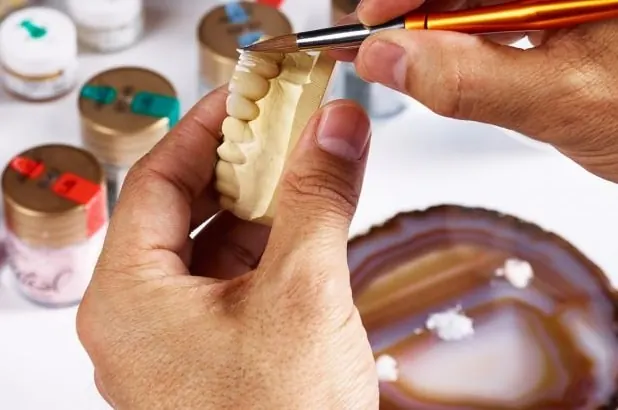
Full Mouth Rehabilitation
Full mouth rehabilitation in Overland Park, KS. Dr. Patrick Lillis rebuilds worn, broken, and failing teeth around how your bite works.
Learn moreHow dentists rebuild worn teeth and the bite
When wear runs across the mouth, rebuilding it means restoring the lost height across the whole arch, so the teeth, jaw muscles, and joints work together again.
Dentists call that height the vertical dimension. When teeth wear down together, the bite can close, and rebuilding the teeth means opening the bite back to the right height.
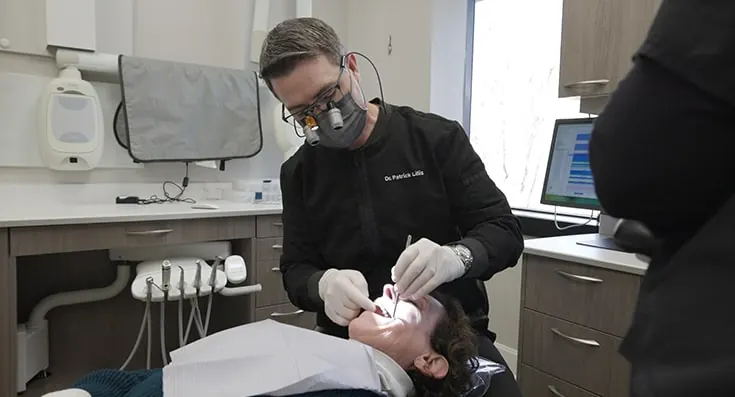
Worn teeth with a closed bite are consistently the hardest cases I do. I have to be meticulous with the records, the bite and the preparation design, and spot on with the diagnosis, because there's no margin for error on a worn dentition.
Here is how I plan full mouth rehabilitation for worn teeth.
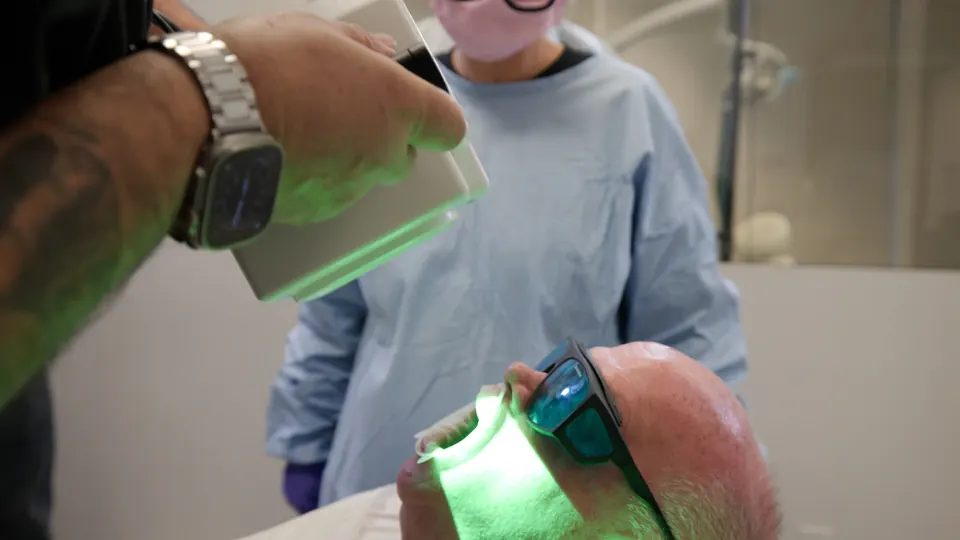
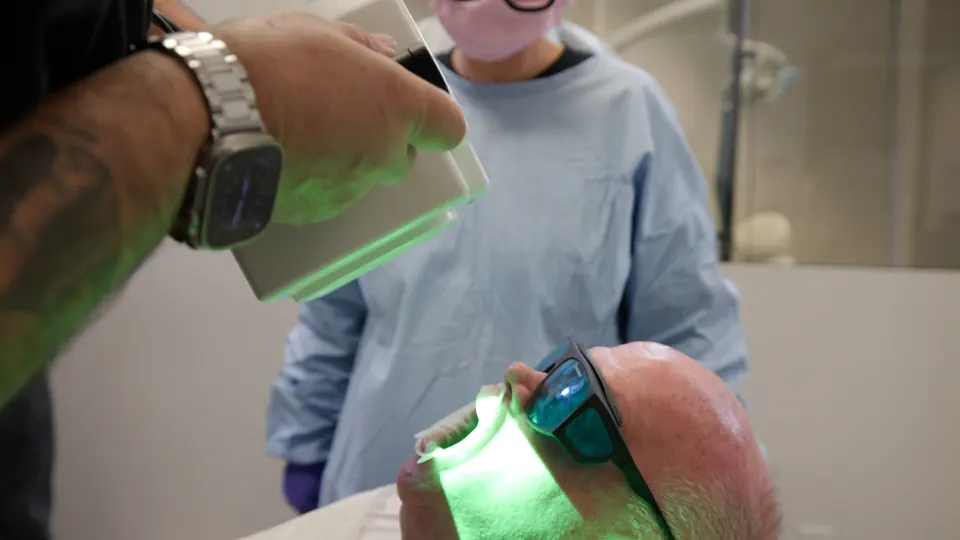
- Records. Photos, intraoral scans, and records of how your jaw moves and how your teeth meet. I look at the teeth, the jaw joints, the muscles, and the airway together, because a tooth that wore down from grinding will wear the new tooth down too unless the plan accounts for it.
- Diagnosis. You hear what wore your teeth down, whether the wear is still active, and how much height you've lost. Every case I fix goes right back to the diagnosis, so I spend the most time on this step.
- Options and costs. Usually two or three paths, each with a written cost, so you can take them home and compare.
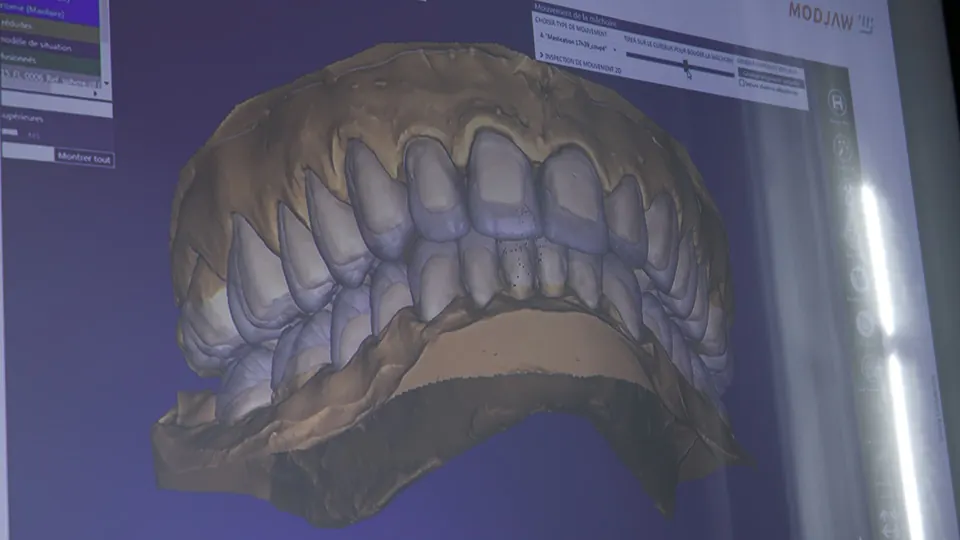
- Design and temporaries. Your records go to the design team in California, and the design comes back in about half an hour. We print it in our office lab and turn it into temporaries you wear at the new height. You eat, talk, and smile in them, and the design changes at this stage if something isn't right. Tooth wear researchers recommend testing a new bite height in the mouth first, and the temporaries do that job.
- Final ceramic. Once you approve the temporaries, the ceramist builds the final crowns and veneers in layers to match them. Layered ceramic copies the color and translucent edge of natural teeth, which matters most on the front teeth that wear down first.
- Bite check and follow-up. I check the bite again with the final teeth in place. From then on, your hygienist checks them at every visit.
Most cases take several months, from planning through the temporary phase to the final restorations.
How to stop your teeth from wearing down further
Slowing the wear starts with finding what's causing it, since a night guard does nothing for acid and a softer brush does nothing for grinding.
- Grinding: a custom night guard or splint, made and checked by a dentist, protects the teeth while you sleep. Store-bought soft guards aren't fitted or checked.
- Daytime clenching: notice when your teeth touch during the day. At rest, your teeth usually sit slightly apart.
- Acid: cut back on sipping sodas, sports drinks, and juice through the day, and talk to your doctor about heartburn or reflux.
- Brushing: use a soft brush and light pressure.
- Snoring: mention it to your dentist and your doctor.
Tracking matters as much as protection. Your hygienist takes a stored intraoral scan at every one-hour hygiene visit here, so we can compare your teeth from one visit to the next and see whether the wear is still progressing.
If your jaw is sore along with the wear, TMJ treatment looks at the joints and muscles as their own problem.
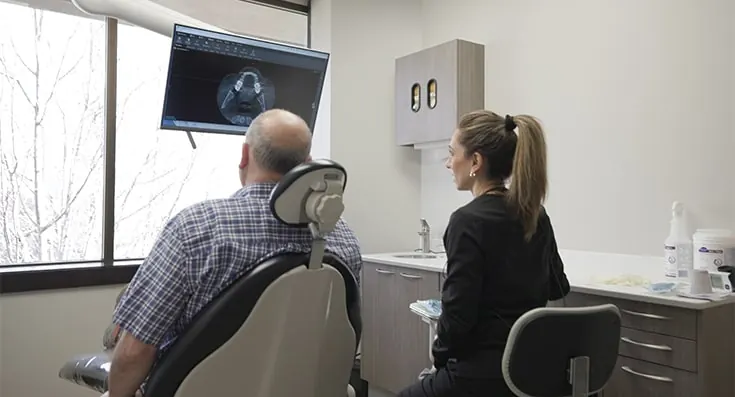
TMJ Treatment
TMJ and jaw pain treatment in Overland Park, KS. Dr. Patrick Lillis examines your teeth, jaw joints, muscles and airway, and starts with conservative, reversible care.
Learn moreWorn down teeth questions
Can worn down teeth be built up?
Yes. Dentists add tooth-colored composite or porcelain to restore length and shape. When many teeth are worn, the build-up is planned across the whole arch so the bite stays even.
Does tooth enamel grow back?
No. Enamel can't regrow once it's worn away. Fluoride can harden softened enamel, but lost height has to be rebuilt with a restoration.
Do teeth get shorter as you get older?
Some wear with age is normal and needs no treatment. Teeth that shorten faster than expected for your age, or that chip, crack or turn sensitive, are worth having checked.
How can I make my teeth longer?
Veneers, crowns or composite build-ups can add length. Added length on a worn front tooth lasts only when the bite has room for it, so the plan starts with how your teeth meet.
Is a night guard enough for worn teeth?
A night guard protects your teeth from further grinding. It doesn't replace tooth structure that's already gone, and it doesn't help wear caused by acid.
Can grinding your teeth cause jaw pain?
Clenching and grinding can make the jaw muscles sore, and they're a common contributor to TMJ disorders. Current research doesn't support a bad bite as the cause of TMJ disorders, so jaw pain and worn teeth are often treated as two separate problems.
Rebuilding worn teeth in Overland Park, KS
At your new patient exam, you hear what wore your teeth down, whether the wear is still active, and your options, with a written cost for each.
Overland Park Dental Design, Patrick B. Lillis, DDS4601 West 109th Street, Suite 318, Overland Park, KS 66211
(913) 451-7330